The Ultimate All Natural DIY Guide to Healing Cracked Heels Fast
Dry, rough, and cracked heels can be an uncomfortable and embarrassing issue, especially during the seasons when you want to wear open-backed shoes or walk barefoot. Many people struggle with thick calluses and deep heel fissures that not only look unappealing but can also become painful if left untreated. While there are countless commercial foot creams, chemical peels, and expensive salon treatments available, you can achieve incredibly smooth, soft feet right at home using simple, budget-friendly ingredients from your kitchen pantry.
This comprehensive guide will walk you through a powerful, all-natural three-ingredient remedy that targets dead skin, deeply moisturizes rough tissue, and restores the natural texture of your feet. By combining the exfoliating power of baking soda, the clarifying properties of fresh lemon, and the deep hydration of organic coconut oil, you can create a highly effective spa-level treatment at home. We will dive deep into the science behind why these ingredients work, explore a step-by-step application process, and share essential long-term foot care tips to prevent cracks from returning.
Understanding Cracked Heels: Causes and Symptoms
Before jumping into the remedy, it is helpful to understand why the skin on your heels cracks in the first place. The skin around our heels is naturally thicker and drier than the skin on the rest of our bodies, and it requires regular maintenance to retain its elasticity. When this skin is subjected to constant pressure, friction, or dehydration, it loses its flexibility and begins to split.
Common External and Internal Triggers
Several daily factors contribute significantly to the breakdown of the skin barrier on your feet. One of the primary culprits is a lack of moisture; unlike other areas of the body, the skin on your feet lacks oil glands, relying solely on sweat glands to stay hydrated. Wearing open-heeled footwear like sandals or flip-flops exposes the skin to dry air and causes the fat pad under the heel to expand sideways, putting extra pressure on dry skin. Prolonged standing on hard floors, using harsh soaps that strip natural oils, and nutritional deficiencies in essential fatty acids or vitamins can all accelerate the formation of severe heel fissures.
The Secret Trio: Why This Natural Remedy Works
The reason this specific homemade treatment is so incredibly effective lies in the synergistic action of its three core ingredients. Each component serves a distinct purpose, moving your skin through the phases of deep exfoliation, chemical softening, and intensive barrier repair.
Baking Soda: The Ultimate Physical Exfoliant
Baking soda, or sodium bicarbonate, is a mild crystalline compound that acts as an exceptional mechanical exfoliant. When mixed with a liquid, its fine particles work to gently loosen and lift away the top layers of dead, flaky skin cells without causing severe micro-tears to the underlying healthy skin. Additionally, baking soda has natural antifungal and antibacterial properties, which helps thoroughly cleanse the feet and neutralize odor-causing bacteria, providing a clean slate for the rest of the treatment.
Lemon: Nature’s Chemical Alpha-Hydroxy Acid
Fresh lemon juice contains high amounts of citric acid, a natural alpha-hydroxy acid (AHA) widely celebrated in the skincare world for its ability to dissolve cellular bonds. The acidity of the lemon gently breaks down the hardened, dead keratin proteins that form tough calluses around the rim of the heel. Furthermore, lemon juice is packed with vitamin C, an essential antioxidant that supports collagen synthesis and helps brighten dull, stained skin, giving your feet a refreshed, radiant look.
Coconut Oil: Intensive Moisture and Skin Barrier Restoration
To prevent the exfoliation process from drying out your feet, a rich emollient is absolutely necessary, and organic coconut oil is the perfect choice. Coconut oil is rich in medium-chain fatty acids, specifically lauric acid, which easily penetrates deep into the lipid layers of the skin. It acts as an occlusive barrier, locking in moisture and protecting raw skin from external friction. Coconut oil also possesses powerful anti-inflammatory and antimicrobial qualities that soothe irritated skin cracks and encourage faster cellular healing.
The All-Natural Cracked Heel Treatment Recipe
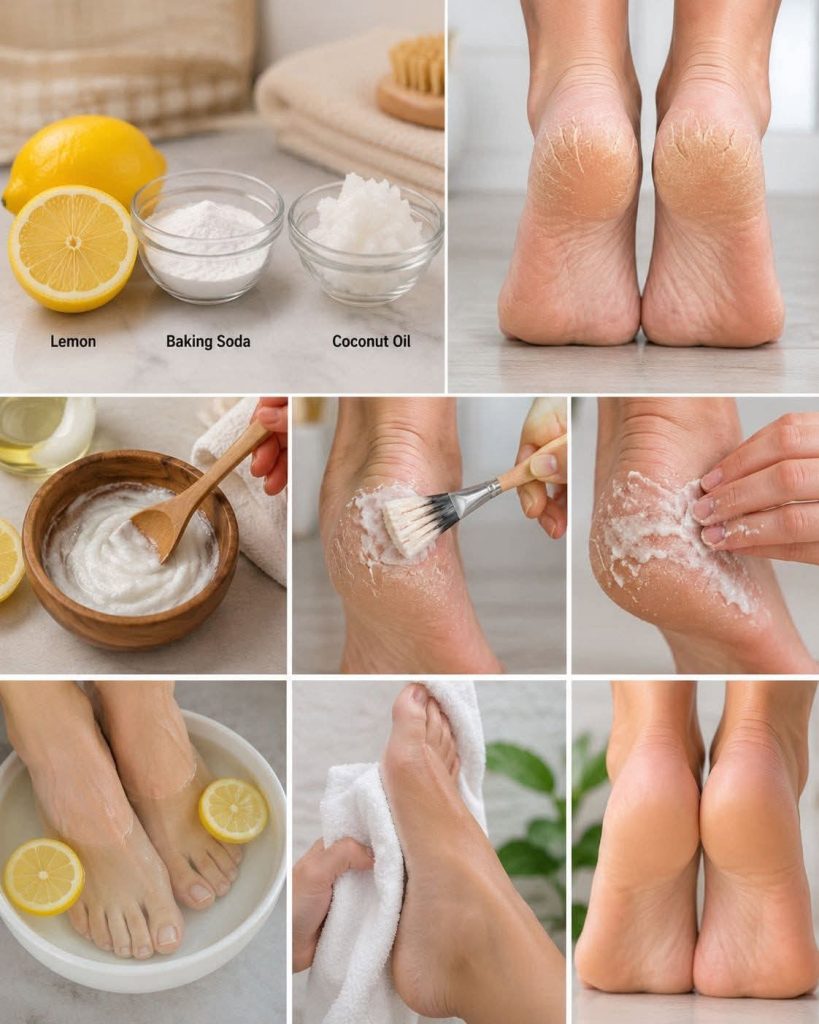
To prepare this intensive foot restoration treatment, you only need three simple ingredients that are likely already sitting in your kitchen or pantry. Gathering high-quality, pure versions of these items ensures your skin receives the maximum therapeutic benefit.
Ingredients Checklist:
- 2 tablespoons Baking Soda: Standard, pure sodium bicarbonate.
- 1 whole fresh Lemon: Squeezed for its juice, with the leftover halves saved for a soothing foot soak.
- 2 tablespoons Virgin Coconut Oil: Unrefined, solid or slightly melted depending on room temperature.
- Warm water and a large basin: For the concluding relaxing rinse and soak.
Step-by-Step Instructions for Baby-Soft Feet
Follow this careful step-by-step application process to safely remove dead skin cells and lock in deep moisture without irritating your skin.
Step 1: Formulating the Exfoliating Paste
In a small wooden or ceramic bowl, combine two tablespoons of baking soda with two tablespoons of virgin coconut oil. Squeeze in about a tablespoon of fresh lemon juice, noting that the mixture will fizz slightly as the acidic lemon reacts with the alkaline baking soda. Use a wooden spoon to stir the ingredients thoroughly until they form a smooth, rich, white paste with a thick, spreadable consistency.
Step 2: Precise Application and Massaging
Using a clean cosmetic brush or your fingertips, scoop up a generous amount of the prepared paste and apply a thick layer directly onto the dry, cracked areas of your heels. Once covered, use your fingers to vigorously massage the paste into the skin using circular motions for 3 to 5 minutes. The baking soda will physically buff away the rough exterior while the lemon juice softens the deep calluses and the coconut oil lubricates the tissue.
Step 3: The Restorative Lemon Foot Soak
After massaging the scrub into your heels, do not wash it off immediately. Instead, prepare a large foot basin filled with comfortably warm water and drop in a few fresh lemon slices or the remaining lemon halves. Submerge both feet entirely into the warm water bath and let them soak for 10 to 15 minutes. This soaking step allows the citric acid to continue its softening work while the warm water opens up the skin’s pores, enabling the coconut oil to penetrate into the deepest layers of the heel.
Step 4: Drying and Post-Treatment Protection
Lift your feet from the basin and use a clean, soft cotton towel to gently pat them completely dry, paying close attention to the spaces between your toes. Your heels should immediately feel significantly softer, smoother, and completely refreshed. To seal in the benefits of this treatment, immediately apply a thin layer of pure coconut oil or a heavy foot cream over your heels and slip on a pair of clean cotton socks to lock in the moisture overnight.
Long-Term Maintenance: Keeping Your Heels Smooth Permanently
While this treatment delivers impressive and immediate results, maintaining beautifully smooth heels requires consistent daily habits to prevent the recurrence of dry skin build-up.
Daily Hydration Routine
The absolute best defense against cracked heels is proactive moisture management. Get into the habit of applying a rich, oil-based moisturizer or pure shea butter to your feet every single evening before bed. Wearing breathable cotton socks over your moisturized feet at night creates an optimal environment for skin regeneration, ensuring you wake up with soft skin every morning.
Choosing the Right Footwear
Pay attention to the shoes you wear during long days of walking or standing. Try to limit the use of thin-soled flip-flops or backless shoes, which allow the skin on your heels to expand and crack under pressure. Opt for supportive, enclosed shoes that cushion the heel pad and reduce structural friction against the skin, helping your feet maintain their natural structural integrity.
Conclusion
You do not need to spend a fortune on high-end salon pedicures or harsh chemical treatments to remedy dry, painful, cracked heels. By harnessing the exfoliating power of baking soda, the natural acidity of fresh lemon, and the deep, nourishing hydration of coconut oil, you can completely revitalize your feet from the comfort of your home. Incorporating this simple, all-natural three-step routine into your weekly self-care schedule will effectively banish stubborn calluses, heal painful cracks, and give you the confidence to show off beautifully smooth, healthy feet all year round.