The Ultimate DIY Home Remedy for Dry, Cracked Heels Natural Foot Soak and Scrub Routine
Dry, thick calluses and cracked heels—often referred to as heel fissures—are among the most common skin concerns affecting people of all ages. Beyond being an aesthetic nuisance during sandals season, deeply cracked heels can cause substantial discomfort, tightness, and even pain when walking. Factors such as prolonged standing on hard surfaces, open-backed footwear, harsh indoor heating, cold weather, and insufficient daily skin hydration can strip the feet of their natural oils, causing the thick outer layers of the skin to dry out, lose elasticity, and split under pressure.
While expensive medical pedicures and commercial foot creams promise quick results, many of these products rely on synthetic fragrances, silicones, and harsh alcohol bases that only offer temporary relief. Fortunately, you do not need costly spa visits or synthetic chemicals to restore softness, smoothness, and flexibility to your feet. A simple, natural two-step home remedy—combining a warm, mineral-rich foot soak with a nourishing salt-and-oil exfoliating scrub—can effectively eliminate dead skin, soften tough calluses, and deeply hydrate the underlying tissue.
This comprehensive guide breaks down everything you need to know about treating cracked heels at home. You will learn the underlying causes of heel fissures, the therapeutic benefits of natural soaking ingredients, step-by-step instructions for creating and applying a homemade sea salt foot scrub, and long-term preventive care strategies to keep your feet remarkably soft, smooth, and healthy year-round.
Understanding Cracked Heels: Causes and Symptoms
To effectively treat dry, cracked heels, it is important to understand why the skin on your feet behaves differently from the rest of your body. Unlike the skin on your face or arms, the skin on the soles of your feet is significantly thicker and entirely lacks sebaceous (oil) glands. The feet rely exclusively on sweat glands to maintain moisture levels. When environmental or lifestyle factors disrupt this delicate balance, the skin on the heels rapidly dries out and loses its natural resilience.
Key Factors Behind Heel Fissures
- Excessive Pressure and Weight Distribution: When standing or walking, your body weight exerts immense downward pressure on your heels. This forces the fat pads in your heels to expand laterally. If the surrounding skin is dry and unyielding, the pressure causes the skin to stretch until small tears—known as fissures—begin to form.
- Prolonged Standing on Hard Surfaces: Spending long hours standing on tile, concrete, or hardwood floors subjects the heels to continuous micro-trauma, causing the body to produce thicker layers of protective dead skin, commonly known as calluses.
- Open-Backed and Unsupportive Footwear: Wearing flip-flops, slingback sandals, or loose slippers allows the heel fat pad to expand sideways without any structural support. Additionally, open shoes expose the heel directly to dry air and friction, accelerating moisture loss.
- Cold Weather and Hot Baths: Winter weather drastically reduces ambient humidity, drying out the skin. Similarly, taking excessively hot showers or long baths strips away the skin’s remaining natural barrier lipids.
- Nutritional Deficiencies and Dehydration: Inadequate daily water intake compromises skin hydration from within. Furthermore, deficiencies in essential fatty acids, zinc, iron, and Vitamin E can weaken the skin’s natural repair mechanisms.
Signs You Need an Intensive Heel Routine
Initial signs of dry heels include flaking, localized itchiness, and yellowish or brownish patches of thickened skin around the border of the heel. If left untreated, these calloused borders turn rigid and form visible vertical cracks. In severe cases, fissures can penetrate into the deeper dermis layer, leading to redness, bleeding, sensitivity, and heightened risk of bacterial or fungal infection. Starting an intensive, natural restorative routine at the very first sign of dryness prevents fissures from deepening into painful wounds.
The Power of Natural Exfoliation and Hydration
A successful foot care routine requires two fundamental actions working in harmony: physical exfoliation to strip away dead, hardened skin layers, followed by deep lipid hydration to repair the skin barrier. Utilizing natural whole-food ingredients ensures that your skin receives mineral nourishment without chemical irritation.
Epsom Salt and Sea Salt: Natural Exfoliants
Coarse sea salt and mineral-rich Epsom salt (magnesium sulfate) form the perfect natural abrasive base for foot scrubs. Sea salt particles possess a rigid, crystal structure that effectively sloughs away dense, dead skin cells without requiring aggressive force. Furthermore, sea salt contains trace minerals—including potassium, calcium, and magnesium—that help balance skin moisture levels and calm localized inflammation. Epsom salt dissolves beautifully in warm water, helping to relax tired foot muscles, soften stubborn calluses, and draw out impurities from the skin pores before scrubbing.
Nourishing Oils: Locking in Essential Moisture
Exfoliating without immediate lubrication can leave freshly exposed skin vulnerable to dryness. Combining natural plant oils directly with salt crystals creates a protective lipid buffer.
- Extra Virgin Olive Oil: Packed with squalene, Vitamin E, and essential fatty acids, olive oil deeply penetrates thick epidermal layers, restoring elasticity to rigid calluses and creating a natural protective moisture shield.
- Sweet Almond Oil: Light, soothing, and easily absorbed, sweet almond oil is rich in Vitamin A and E, making it ideal for soothing cracked, irritated skin surfaces.
- Jojoba Oil: Possessing a chemical structure remarkably similar to human sebum, jojoba oil absorbs effortlessly into skin layers, providing deep, long-lasting hydration without clogging pores.
- Coconut Oil: Renowned for its natural antimicrobial and antifungal properties, coconut oil helps protect healing fissures from environmental bacteria while offering rich, soothing moisture.
Master Recipe: DIY Salt and Oil Foot Scrub Routine
This home pedicure routine is divided into two continuous phases: a relaxing, softening foot bath followed by an invigorating, restorative salt scrub. Performing this complete process once or twice a week produces noticeable improvements after the very first session.
Ingredients and Tools Needed
- For the Soaking Bath: 1 large basin or foot tub, 4–6 cups of comfortably warm water, 1/2 cup of pure Epsom salt or coarse sea salt, and optional drops of lavender or tea tree essential oil.
- For the Exfoliating Scrub: 1/2 cup of coarse sea salt (or Epsom salt), 3 tablespoons of high-quality extra virgin olive oil (or sweet almond oil), and 1 teaspoon of raw honey (for extra humectant moisture).
- For Clean-up and Aftercare: 1 clean, soft cotton towel, a pair of breathable 100% cotton socks, and a rich natural moisturizer or heel balm.
Step-by-Step Preparation and Application
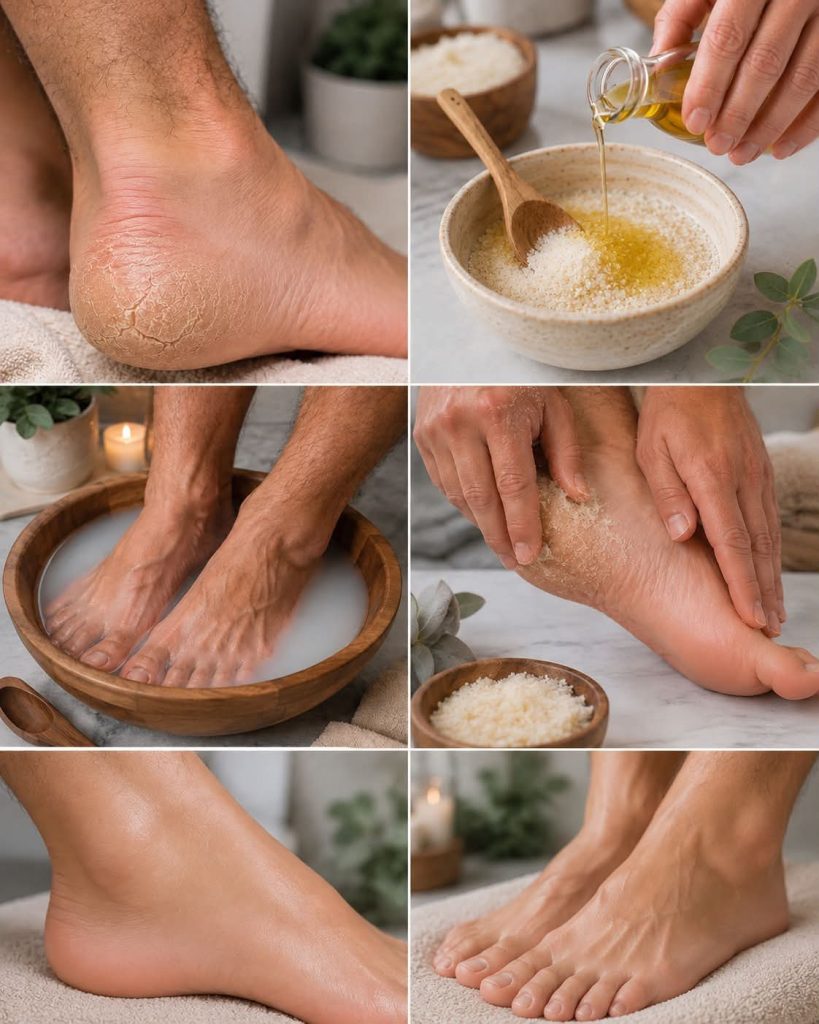
Step 1: Prepare the Soaking Basin
Fill a large wooden, plastic, or ceramic basin with comfortably warm water—ensure the water is warm enough to relax muscles and open pores, but not uncomfortably hot. Pour 1/2 cup of Epsom salt or coarse sea salt directly into the water. Stir gently with a wooden spoon or your hand until the salt crystals dissolve completely. If desired, add 3 to 5 drops of tea tree essential oil for natural antibacterial protection or lavender oil for a soothing aromatic experience.
Step 2: Soak and Soften the Feet
Submerge both feet into the warm, mineral-rich bath. Sit back, relax, and allow your feet to soak undisturbed for 15 to 20 minutes. During this period, the warm water and dissolved minerals deeply hydrate the tough, keratinized calluses surrounding your heels, softening the hardened skin and making it effortless to exfoliate without scraping or damaging healthy tissue.
Step 3: Mix the Homemade Salt Scrub
While your feet are soaking, prepare the fresh exfoliating scrub in a small ceramic or glass bowl. Combine 1/2 cup of coarse sea salt with 3 tablespoons of extra virgin olive oil. Add 1 teaspoon of raw honey if extra hydration is desired. Stir the ingredients together thoroughly until the salt is completely saturated with oil, forming a thick, damp paste that holds together easily without being overly runny.
Step 4: Exfoliate and Scrub the Heels
Lift one foot out of the soaking basin and rest it comfortably over a towel or across your knee. Scoop a generous tablespoon of the salt-and-oil scrub into your palms. Using firm, circular motions with your thumbs, massage the scrub directly onto the heel, sole, and calloused edges of your foot. Focus extra attention on visible cracks and thickened skin areas for 2 to 3 minutes per foot. The abrasive salt particles gently polish away dead skin, while the olive oil immediately coats the fresh skin underneath.
Step 5: Rinse, Dry, and Inspect
Re-submerge your foot into the warm bath water to rinse away remaining salt crystals, or rinse under clean running water. Lift both feet out and gently pat them dry using a clean cotton towel. Avoid rubbing aggressively with the towel, as you want to leave a micro-thin layer of the nourishing olive oil absorbed into your skin. Inspect your heels; you will immediately notice a softer, smoother texture and a reduction in surface flaking.
Daily Maintenance and Preventive Foot Care
Exfoliating once or twice a week removes built-up dead skin, but consistent daily care prevents calluses and cracks from returning. Incorporating simple daily habits ensures your feet stay supple and youthful throughout every season.
Deep Overnight Moisturizing Protocol
The single most effective way to maintain soft heels is to perform an overnight moisture treatment before going to sleep. Every night before bed, apply a generous layer of rich foot cream, pure shea butter, or extra virgin olive oil directly to your heels and soles. Immediately slip on a pair of clean, breathable 100% cotton socks. The socks trap heat and moisture against your skin throughout the night, forcing the beneficial lipids deep into the epidermal layers while preventing oil from transferring onto your bedsheets.
Choosing the Right Footwear
Protecting your heels requires wearing shoes that offer proper structural support and cushioning.
- Avoid wearing open-backed sandals, flip-flops, or thin-soled flats for extended periods, especially when walking long distances on hard pavement.
- Select closed-heel shoes with a cushioned footbed and adequate shock absorption to minimize lateral expansion of the heel fat pad.
- Wear moisture-wicking cotton or wool socks with athletic shoes to reduce friction and absorb excess sweat, which can otherwise cause skin maceration and cracking.
Frequently Asked Questions
How often should I perform this salt scrub routine?
For severe dryness or prominent calluses, perform the soak and scrub routine 2 times per week for the first 14 days. Once your skin improves and becomes smooth, drop down to a maintenance schedule of once every 1 to 2 weeks to keep dead skin from accumulating.
Can I use sugar instead of salt for a foot scrub?
Yes, white or brown sugar can be used as an alternative exfoliant. Sugar crystals are smaller and smoother than sea salt, making them gentler on sensitive skin. However, for extremely thick, hardened heel calluses, coarse sea salt or Epsom salt is generally more effective at removing stubborn dead skin layers.
When should I see a podiatrist for cracked heels?
You should consult a healthcare professional or podiatrist if your heel cracks are bleeding, deep, extremely painful to walk on, or show signs of infection such as redness, swelling, warmth, or discharge. Individuals diagnosed with diabetes, neuropathy, or poor circulation should avoid DIY cutting or aggressive home scrubbing and seek professional medical foot care instead.
Conclusion
Restoring dry, cracked heels back to smooth, healthy softness does not require expensive clinical pedicures or harsh chemical treatments. By adopting a simple, natural routine—combining a relaxing mineral foot soak with a nourishing sea salt and olive oil scrub—you can safely exfoliate dead skin, soften stubborn calluses, and restore vital moisture to your feet directly at home. Combined with consistent overnight moisturizing and supportive footwear, this easy two-step remedy ensures your feet stay smooth, comfortable, and beautifully healthy in every season. Prepare your warm bath, mix your fresh salt scrub today, and give your feet the gentle care they deserve.