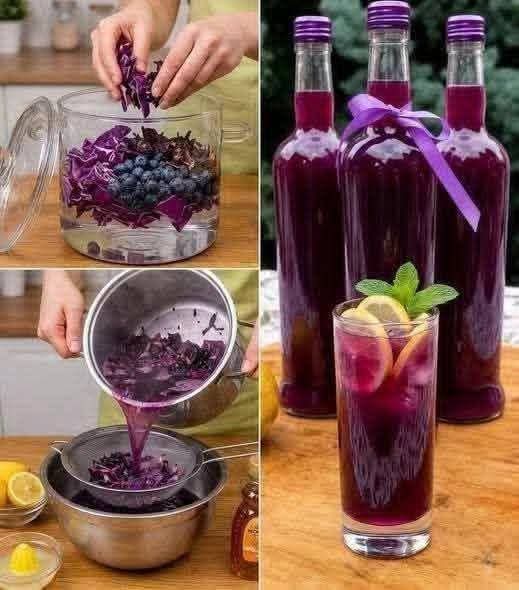
The Ultimate Homemade Purple Botanical Elixir Crafting Red Cabbage and Blueberry Lemon Concentrate
In the world of craft beverages and natural kitchen remedies, few drinks capture the imagination like a vibrant, color-changing purple botanical syrup. Bright, rich in natural antioxidants, and strikingly gorgeous when served over ice, this Homemade Red Cabbage & Blueberry Purple Lemonade Concentrate brings together the hidden magic of natural plant pigments with the crisp refreshing taste of citrus and berries. While red cabbage might sound like an unconventional beverage ingredient, it has long been prized by herbalists and creative mixologists alike for its ultra-concentrated anthocyanins—the powerful natural pigments responsible for deep purple and blue hues in plants. When paired with sweet blueberries, aromatic botanicals, raw honey, and fresh lemon juice, the earthy notes of red cabbage completely transform into a smooth, refreshing, and deeply nourishing herbal syrup.
Crafting your own botanical syrups and herbal drinks at home gives you complete control over flavor complexity, natural sweetness, and beverage purity. Unlike commercial fruit syrups laden with high-fructose corn syrup, artificial food dyes like Red 40 or Blue 1, and chemical preservatives, this natural purple elixir relies entirely on wholesome plant foods. In this comprehensive guide, we will dive into the science of natural plant pigments, detail every essential ingredient and kitchen step needed to extract and bottle this elixir, share expert troubleshooting tips, and answer the most frequently asked questions about creating vibrant color-changing beverages right in your home kitchen.
The Fascinating Science of Anthocyanins & Color-Changing Drinks
What makes this purple drink truly captivating is not just its striking aesthetic, but the food science working behind the scenes. Red cabbage and blueberries are two of nature’s richest sources of anthocyanins—a class of water-soluble flavonoid pigments found in red, purple, and blue fruits and vegetables. Anthocyanins are unique because they act as natural pH indicators, shifting their molecular structure and visual color depending on the acidity or alkalinity of their environment.
In a neutral liquid environment (around pH 7), extracted red cabbage juice displays a deep purple or violet color. When exposed to an alkaline environment, it shifts toward blue, teal, or green. However, when combined with an acid such as fresh lemon juice or lime juice (around pH 2 to 3), the anthocyanin molecules undergo a structural shift that transforms the liquid into a brilliant, glowing magenta-pink or fiery violet. This natural chemical reaction allows you to serve guest-impressing “magic” cocktails and mocktails at home, pouring a rich blue-purple syrup over ice and watching it shift into bright pink as fresh lemon juice is stirred in.
Health and Nutritional Benefits of This Purple Herbal Syrup
Beyond its captivating presentation, this homemade botanical syrup packs a remarkable nutritional punch. Each key ingredient contributes valuable bioactive compounds that support daily vitality, joint health, and natural cellular defense systems.
1. Superior Antioxidant Protection
Both red cabbage and blueberries contain exceptionally high concentrations of polyphenol antioxidants. Anthocyanins help neutralize free radicals in the bloodstream, reducing oxidative stress and supporting cardiovascular wellness. Regular consumption of polyphenol-rich plant foods is linked to improved blood vessel function, reduced inflammation, and enhanced metabolic health.
2. Immune and Digestive Wellness
Red cabbage is a powerhouse of essential vitamins, including Vitamin C, Vitamin K, and trace minerals like potassium and manganese. Furthermore, red cabbage extracts contain natural glutamine and sulfur compounds that soothe the mucosal lining of the stomach and support healthy gastrointestinal function. Combined with raw honey’s natural antibacterial enzymes and lemon juice’s digestive acids, this syrup acts as a soothing daily digestive tonic.
3. Clean, Hydrating Refreshment
Store-bought sodas and energy drinks subject your body to refined sugars and chemical additives that trigger rapid blood sugar spikes followed by energy crashes. Enjoying a glass of sparkling water infused with 2 tablespoons of real botanical syrup offers a low-calorie, hydrating alternative that satisfies sweet cravings while keeping your energy steady throughout the day.
Essential Ingredients: Choosing Quality Produce
Because this recipe extracts delicate aromas and pigments directly into liquid, using high-quality whole ingredients yields the cleanest, most vibrant flavor profile.
1. Organic Red Cabbage
You will need 2 cups of coarsely chopped organic red cabbage. Look for heads that are heavy for their size with tight, deeply colored violet-purple leaves. Because the outer leaves are steeped in hot water to draw out natural pigments, choosing organic cabbage ensures your infusion is free from synthetic pesticide residues. Do not worry about a cabbage flavor; when boiled briefly and combined with fruit sugars and lemon juice, the vegetable taste vanishes completely.
2. Fresh or Frozen Blueberries
You will need 1 cup of fresh or frozen blueberries. Blueberries add natural fruit sweetness, delicate berry aromatics, and additional deep blue anthocyanins that soften the earthy notes of the cabbage. Frozen wild blueberries are an extraordinary option here, as the freezing process breaks down cellular walls, releasing even more rich juice and pigment during simmering.
3. Dried Hibiscus Flowers or Botanical Spices
Adding 2 tablespoons of dried hibiscus petals (or whole cloves / rose hips) introduces a sharp, tangy floral aroma and deepens the crimson-purple color spectrum. Hibiscus naturally complements citrus while contributing high levels of organic acids and Vitamin C.
4. Fresh Organic Lemons
You will need \frac{3}{4} cup of freshly squeezed lemon juice (from approximately 4 to 5 large lemons), plus extra lemon slices for serving garnish. Fresh lemon juice provides the acidity needed to balance the sweet syrup base while triggering the dramatic visual color shift from deep violet to bright purple-pink.
5. Raw Organic Honey or Pure Sugar
You will need 1 cup (340\text{g}) of raw honey or granulated white sugar. Honey acts as both a natural sweetener and a body-building agent, giving the syrup a silky, smooth pourability. If you prefer a completely translucent, jewel-toned clarity in your final bottled syrup, white granulated sugar or simple cane sugar can be used.
Equipment Needed for Preparation and Bottling
Gathering your tools beforehand ensures a clean, organized cooking process without messy spills or stained countertops.
- Large Stainless Steel Pot: Use stainless steel or enamel-coated cookware. Avoid unlined aluminum or iron pots, as reactive metals can react with natural anthocyanin pigments and alter the color.
- Fine-Mesh Stainless Steel Strainer: Essential for catching spent cabbage leaves, blueberry skins, and botanical solids.
- Large Glass Mixing Bowl: To receive the warm, strained liquid extract.
- Citrus Reamer or Hand Juicer: For extracting maximum juice from fresh lemons.
- Sterilized Glass Bottles with Swing-Top Lids: As shown in the preparation images, clear glass swing-top bottles decorated with ribbons are perfect for storing and gifting your syrup.
- Silicon Funnel: For transferring liquid into narrow bottle necks smoothly without dripping.
Step-by-Step Recipe: Crafting the Purple Botanical Syrup
Follow these clear, detailed steps to prepare, simmer, strain, sweeten, and bottle your home-crafted purple lemonade concentrate.
Step 1: Prep and Chopping
Wash the red cabbage, blueberries, and fresh lemons thoroughly under cool running water. Coarsely chop the red cabbage into medium 1-inch ribbons, discarding the hard central core. Measure out 2 cups of chopped cabbage and 1 cup of blueberries.
Step 2: The Botanical Hot Extraction
In a large stainless steel pot, combine the chopped red cabbage, blueberries, and dried hibiscus petals (or spices). Pour in 4 cups (1\text{ liter}) of filtered water, ensuring all plant materials are submerged under the liquid.
Place the pot over medium-high heat and bring the mixture to a gentle, rolling simmer. Once simmering, reduce the heat to low, cover the pot with a tight-fitting lid, and let it gently simmer for 15 to 20 minutes. As the ingredients simmer, you will see the water turn a deep, opaque purple-violet while the cabbage leaves gradually lose their rich color.
Step 3: Straining the Extract
Place a fine-mesh strainer lined with cheesecloth over a large glass mixing bowl. Carefully pour the hot liquid and cooked plant material through the strainer.
Using the back of a wooden spoon or silicone spatula, gently press down on the cooked cabbage and softened blueberries to extract every last drop of nutrient-dense liquid. Do not press excessively hard if you want a crystal-clear syrup, as forcing pulp through the mesh can make the liquid slightly cloudy. Discard the spent cabbage and fruit skins.
Step 4: Sweetening and Balancing
While the strained purple liquid is still warm (around 110^\circ\text{F} to 130^\circ\text{F}), add 1 cup of raw organic honey or granulated sugar. Stir continuously for 2 to 3 minutes until the sweetener is completely dissolved into the hot liquid.
Allow the sweetened purple base to cool down to room temperature. Once cooled, stir in \frac{1}{4} cup of fresh lemon juice. Watch closely as the liquid instantly brightens into a vivid, glowing magenta-purple hue! Reserve the remaining \frac{1}{2} cup of lemon juice for mixing individual serving glasses later.
Step 5: Bottling and Cold Storage
Place a clean silicone funnel into the neck of your sterilized glass bottles. Carefully pour the cool purple botanical syrup into each bottle, leaving 1 inch of headspace at the top.
Seal the bottles tightly with swing-top caps or cork stoppers. Decorate with purple ribbons if giving as homemade gifts, and place the bottles into the refrigerator to chill completely for at least 3 hours before serving.
How to Serve and Mix Creative Beverages
This versatile purple concentrate serves as the base for a wide array of non-alcoholic mocktails, craft sodas, and entertaining dinner party cocktails.
Classic Iced Purple Lemonade
Fill a tall glass with clear ice cubes and add 2 to 3 fresh lemon slices. Pour \frac{1}{3} cup of chilled purple botanical syrup over the ice, followed by 1 cup of cold sparkling water or filtered still water. Squeeze a fresh lemon wedge over the top and stir gently with a long spoon to watch the colors swirl and transform into a bright magenta pink. Garnish with a fresh sprig of green mint.
Sparkling Botanical Purple Spritzer
In a champagne flute, combine 1.5 ounces of purple syrup with chilled non-alcoholic sparkling apple cider, prosecco, or club soda for an elegant, bubbling celebratory toast.
Color-Changing Layered Mocktail
To create a dramatic two-toned layered drink, fill a glass completely with crushed ice. Pour 2 ounces of purple syrup mixed with 2 ounces of water at the bottom. In a separate pitcher, mix fresh lemon juice with simple syrup and cold water. Slowly pour the lemonade over the back of a spoon onto the top of the ice. The dense purple syrup will remain at the bottom while the pale yellow lemonade floats on top, creating a stunning gradient effect until stirred!
Pro Tips for Culinary and Visual Success
- Control the Heat: Simmer the cabbage and berries over gentle, low heat. Rapid boiling can break down delicate flavor compounds and produce a cooked vegetable aroma.
- Use Stainless Steel or Glass: Pigments easily stain plastic mixing bowls, cutting boards, and wooden utensils. Work with glass, stainless steel, or ceramic tools to prevent permanent purple discoloration.
- Adjust Sweetness to Taste: Depending on whether you prefer a tart lemonade or a sweet beverage syrup, adjust the raw honey quantity up or down by \frac{1}{4} cup.
- Filter Twice for Clarity: For ultra-sleek, crystalline syrup bottles, run the liquid through a second strain using a fine coffee filter lined inside your strainer.
Troubleshooting Common Botanical Syrup Issues
Why Does My Syrup Taste Like Cabbage?
If your syrup has a noticeable vegetable flavor, the cabbage was likely boiled for too long or at too high a temperature. Additionally, skipping the fruit components (blueberries, hibiscus, or lemon juice) leaves the earthy cabbage compounds unmasked. To fix a batch that tastes too vegetable-forward, add an extra \frac{1}{4} cup of fresh lemon juice and a splash of fruit juice like apple or pomegranate.
Why Is The Syrup Liquid Thin Rather Than Thick?
This recipe yields a light beverage concentrate rather than a dense pancake syrup. If you desire a thick, pourable syrup consistency for drizzling over desserts, return the strained liquid to the pot with equal parts sugar by weight and simmer uncovered over low heat for 10 to 15 minutes to reduce and evaporate water before cooling.
Why Did My Liquid Turn Grayish or Dull?
Anthocyanin pigments degrade when exposed to extreme heat for extended periods or when mixed with hard tap water containing high mineral concentrations (iron or calcium). Always use cold filtered water for brewing and add fresh citrus juice after cooling to keep colors vibrant.
Storage Life and Safety Guidelines
Because this homemade syrup contains natural fruit sugars, fresh lemon juice, and no artificial chemical preservatives, proper food handling and cold storage are essential.
- Refrigeration Required: Always store filled glass bottles tightly sealed in the coldest section of your refrigerator. Never store at room temperature once bottled.
- Shelf Life: Kept continuously chilled in airtight glass bottles, this purple botanical syrup remains fresh and vibrant for up to 2 to 3 weeks.
- Freezer Storage: You can freeze syrup batches in silicone ice cube trays for long-term storage up to 6 months. Drop frozen purple ice cubes directly into clear lemonade or soda water for a slow-release color effect as they melt!
- Signs of Spoilage: Visually inspect your bottles before pouring. If you observe cloudiness, fermented bubbling, off-odors, or mold growth near the surface, discard the bottle and wash the container thoroughly.
Frequently Asked Questions (FAQs)
Can I make this recipe without red cabbage?
Yes! If you want a natural purple syrup without using red cabbage, you can increase the quantity of fresh blueberries to 3 cups, or combine blueberries with dried butterfly pea flowers or black elderberries. However, red cabbage provides the most distinct color-changing reaction when mixed with acidic lemon juice.
Is this purple drink suitable for kids?
Absolutely! Kids love watching the “magic” color-changing reaction take place right in their glass when lemon juice is added. Made with real fruit, vegetables, water, and raw honey, it provides a fun, wholesome, and caffeine-free alternative to sugary boxed drinks.
Can I use a sugar substitute like stevia or monk fruit?
Yes, you can substitute raw honey with a keto-friendly liquid sweetener such as monk fruit syrup, stevia drops, or erythritol simple syrup. Keep in mind that natural honey adds viscosity, so sugar-free versions will have a thinner liquid consistency similar to flavored water.
Final Thoughts
Creating your own Homemade Red Cabbage & Blueberry Purple Botanical Syrup is a delightful blend of culinary science, natural health, and creative beverage crafting. From extracting deep violet anthocyanins in a simmering pot to watching your glass glow magenta-pink with a fresh splash of lemon, every step of the process is a sensory treat. Beautifully bottled in glass with decorative ribbons, this unique concentrate makes a memorable addition to any summer gathering, weekend brunch, or homemade gift basket. Gather your fresh lemons, blueberries, and red cabbage, bottle up a batch today, and enjoy the refreshing magic of natural botanical drinks!