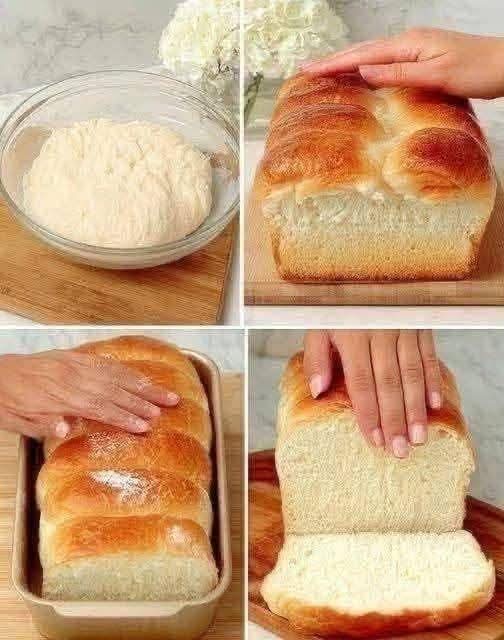
Ultra Soft Japanese Milk Bread Shokupan Sandwich Bread
There is nothing quite like slicing into a loaf of freshly baked Japanese Milk Bread (also known as Shokupan). Characterized by its pillowy soft texture, feather-light crumb, subtle sweetness, and golden domed top, this classic Asian bakery staple has taken the home baking world by storm. Thanks to a simple pre-cooked starter technique called tangzhong, this sandwich loaf stays fresh, tender, and incredibly moist for days longer than standard homemade white bread.
Whether you are making artisan morning toast smeared with butter and jam, preparing ultra-tender tea sandwiches, or simply craving the comfort of home-baked bread, this step-by-step guide will help you achieve bakery-quality Japanese Milk Bread right in your own kitchen.
Why You Will Love This Milk Bread Recipe
Mastering homemade yeast bread can feel intimidating, but this Japanese milk bread recipe is designed to be accessible, consistent, and deeply satisfying.
- Incredible Cloud-Like Texture: The bread tears away in soft, airy ribbons and melts in your mouth with every bite.
- Long-Lasting Freshness: Using the tangzhong roux method retains moisture inside the dough, keeping the loaf fresh and soft at room temperature for up to 4 days without preservatives.
- Golden Domed Look: Formed into distinctive dough rolls placed side-by-side in a loaf pan, this bread bakes into beautiful, symmetrical golden domes.
- Versatile Everyday Loaf: Perfectly balanced between subtle sweetness and rich butteriness, making it ideal for both sweet jams and savory sandwiches.
The Secret Technique: What is Tangzhong?
The defining secret behind authentic Japanese Milk Bread is Tangzhong—a Japanese gelatinization technique adapted from Chinese water roux methods.
Tangzhong is made by cooking a small portion of flour with water or milk over medium heat to form a thick, paste-like porridge. Heating the flour to roughly 150°F (65°C) gelatinizes the starches, allowing them to absorb and retain up to twice as much liquid as unheated flour. When this paste is mixed into the main dough, it locks in moisture, relaxes gluten strands, and produces a sky-high rise with an exceptionally soft, pillowy crumb.
Essential Kitchen Equipment
Having the right baking equipment makes handling yeast dough effortless and accurate.
- Standard 9×5-Inch Loaf Pan: Non-stick or light-colored metal pans work best for even crust browning.
- Stand Mixer with Dough Hook: While you can knead this rich, hydrated dough by hand, an electric stand mixer makes developing strong gluten structure much easier.
- Small Saucepan & Whisk: Used to make the quick tangzhong paste.
- Rolling Pin: Essential for flattening and shaping the dough portions into tight rolls.
- Digital Kitchen Scale: Recommended for accurate flour and liquid measurements, ensuring consistent results every time.
Key Ingredients & Substitutions
Simple, high-quality baking essentials work together to create rich flavor and structure.
For the Tangzhong (Starter Paste)
- All-Purpose or Bread Flour (3 tablespoons / ~20g): Provides the starches needed for gelatinization.
- Whole Milk (1/2 cup / ~120ml): Hydrates the flour to create a silky, smooth paste.
For the Main Milk Bread Dough
- Bread Flour (3 and 1/2 cups / ~420g): High-protein flour gives the dough strong structure and elastic stretch. (All-purpose flour can be used in a pinch, but bread flour yields the highest rise).
- Instant Dry Yeast or Active Dry Yeast (2 and 1/4 teaspoons / 1 packet): Instant yeast can be mixed directly with dry ingredients, while active dry yeast should be dissolved in warm milk first.
- Granulated Sugar (1/4 cup / ~50g): Sweetens the dough gently and feeds the yeast for a strong rise.
- Fine Sea Salt (1 teaspoon): Strengthens gluten and balances flavor.
- Whole Milk (1/2 cup / ~120ml, warm to 105°F/40°C): Adds moisture and milk fats for tender crumb structure.
- Large Egg (1 room temperature egg): Adds richness, color, and stability.
- Unsalted Butter (4 tablespoons / 1/2 stick, softened): Mixed in near the end of kneading to enrich the dough without slowing gluten development.
For the Egg Wash & Glaze
- Egg Wash: 1 egg beaten with 1 tablespoon of milk for a shiny, golden-brown crust.
- Melted Butter (1 tablespoon): Brushed over the hot loaf right out of the oven for a soft, shimmering top.
Step-by-Step Baking Instructions
Step 1: Make the Tangzhong
In a small saucepan, combine the 3 tablespoons of flour and 1/2 cup of whole milk. Whisk thoroughly until smooth with no lumps. Place the saucepan over medium-low heat and cook, whisking continuously, for 2 to 3 minutes until the mixture thickens into a translucent, pudding-like paste that leaves lines on the bottom of the pan. Remove from heat, transfer to a small bowl, and let cool to room temperature.
Step 2: Mix the Dry Ingredients
In the bowl of a stand mixer fitted with the dough hook, whisk together the bread flour, sugar, yeast, and fine sea salt. Ensure the yeast and salt are placed on opposite sides of the bowl initially, as direct concentrated contact with salt can reduce yeast activity.
Step 3: Combine Wet Ingredients & Tangzhong
Make a well in the center of the dry ingredients. Add the cooled tangzhong paste, warm milk, and beaten egg. Turn the mixer on low speed and mix for 2 to 3 minutes until a rough, shaggy dough forms and no dry flour remains.
Step 4: Knead in Softened Butter
With the mixer running on medium-low speed, add the softened butter one tablespoon at a time, letting each piece incorporate into the dough. Once all the butter is added, increase speed to medium and knead for 8 to 10 minutes. The dough will start off wet and sticky, but will transform into a smooth, elastic, and slightly tacky ball that pulls away cleanly from the sides of the bowl.
The Windowpane Test: To check if gluten is sufficiently developed, take a small piece of dough and gently stretch it with your fingers. If you can stretch it into a thin, translucent membrane without it tearing immediately, the dough is ready!
Step 5: First Proofing
Shape the kneaded dough into a smooth ball. Place it into a lightly oiled bowl, cover tightly with plastic wrap or a damp kitchen towel, and set it in a warm, draft-free spot for 1 to 1.5 hours, or until it has doubled in size.
Step 6: Shape the Dough
Punch down the risen dough to release excess gas. Transfer to a clean, lightly floured surface and divide evenly into 3 or 4 equal portions (using a kitchen scale for precise weight). Roll each portion into a ball, cover loosely, and let rest for 10 minutes to relax the gluten.
To shape each roll:
- Roll a dough ball into an oval strip about 8 to 10 inches long using a rolling pin.
- Fold the left third over the center, then fold the right third over like a business letter.
- Turn the folded strip 90 degrees and roll it out flat again into a long rectangle.
- Roll the dough up tightly from the bottom edge into a neat cylinder, pinching the seam closed.
- Repeat with the remaining dough portions.
Step 7: Second Proofing
Lightly grease your 9×5-inch loaf pan with butter or non-stick spray. Place the shaped dough rolls side-by-side in a row inside the pan, seams facing down. Cover the loaf pan loosely with a clean towel and let rise in a warm place for 45 to 60 minutes, or until the dough fills the pan and domes about 1 inch above the rim.
Step 8: Bake to Golden Perfection
Preheat your oven to 350°F (175°C). Gently brush the top of the risen dough with the egg wash using a soft pastry brush.
Bake on the middle rack for 28 to 32 minutes. The top should turn a deep, golden mahogany brown. If the top browns too quickly before the center is done, loosely tent aluminum foil over the top of the pan during the final 10 minutes of baking. An internal thermometer inserted into the center should register 190°F–200°F (88°C–93°C).
Step 9: Cool and Glaze
Remove the bread from the oven and immediately brush the top crust with melted butter for a beautiful sheen and extra soft crust. Allow the loaf to cool in the pan for 10 minutes, then invert onto a wire cooling rack to cool completely before slicing.
Pro Tips for Bakery-Style Success
- Temperature Control: Ensure your milk is warm (100°F–110°F) and not hot. Hot liquids over 120°F will deactivate or kill the yeast.
- Don’t Rush the Cooling: Slicing warm bread is tempting, but cutting into hot bread squishes the delicate internal structure, making it gummy. Wait until room temperature for clean, airy slices.
- Use Bread Flour: High protein content (12% to 14%) creates the elastic gluten network needed to achieve characteristic vertical tearing texture.
Flavor Variations & Creative Ideas
- Raisin or Cinnamon Swirl: Flatten each portion, sprinkle cinnamon sugar or soaked raisins onto the dough before rolling it into cylinders.
- Matcha or Chocolate Milk Bread: Replace 2 tablespoons of bread flour with high-grade matcha powder or cocoa powder in the dough for vibrant color and flavor.
- Cheese-Stuffed Rolls: Roll a block of low-moisture mozzarella or cheddar into the center of each dough roll before placing them into the baking pan.
Storage, Freezing, and Reheating Instructions
- Room Temperature Storage: Store sliced or whole milk bread in an airtight ziplock bag or bread box at room temperature for up to 4 days.
- Avoid Refrigeration: Storing bread in the refrigerator accelerates starch retrogradation, causing the bread to go stale faster.
- Freezing: Slice the cooled loaf completely, place parchment paper between slices, and seal inside a freezer bag for up to 3 months. Toast slices directly from frozen!
Frequently Asked Questions (FAQ)
Why did my milk bread turn out dense instead of fluffy?
Dense milk bread is typically caused by insufficient gluten development (under-kneading), inactive yeast, or under-proofing during the second rise. Ensure your dough passes the windowpane test and rises fully above the rim of the pan before baking.
Can I make the tangzhong ahead of time?
Yes! You can prepare the tangzhong paste up to 24 hours in advance. Keep it covered in the refrigerator and bring it back to room temperature before adding it to your main dough.
Can I make this dough without a stand mixer?
Yes, you can knead this dough by hand! Be prepared to knead continuously for 15 to 20 minutes on a clean surface. Avoid adding excessive flour during hand kneading; the dough will become less sticky as gluten develops.
Recipe Summary Card
Prep & Bake Times
- Prep Time: 25 minutes
- Proofing Time: 2 hours
- Bake Time: 30 minutes
- Total Time: 2 hours 55 minutes
- Yield: 1 loaf (8 to 10 thick slices)
Quick Ingredient List
- Tangzhong: 3 tbsp flour + 1/2 cup milk
- Main Dough: 3 and 1/2 cups bread flour, 1/4 cup sugar, 1 tsp salt, 2 and 1/4 tsp instant yeast
- 1/2 cup warm milk, 1 egg, 4 tbsp softened unsalted butter
- Egg wash + 1 tbsp melted butter for finishing
Final Thoughts
This Japanese Milk Bread recipe brings soft, cloud-like, bakery-style loaves right into your home kitchen. Thanks to the power of tangzhong, you can enjoy sweet, tender, sliceable bread that remains fresh for days. Try baking a loaf this weekend and elevate your morning toast experience!