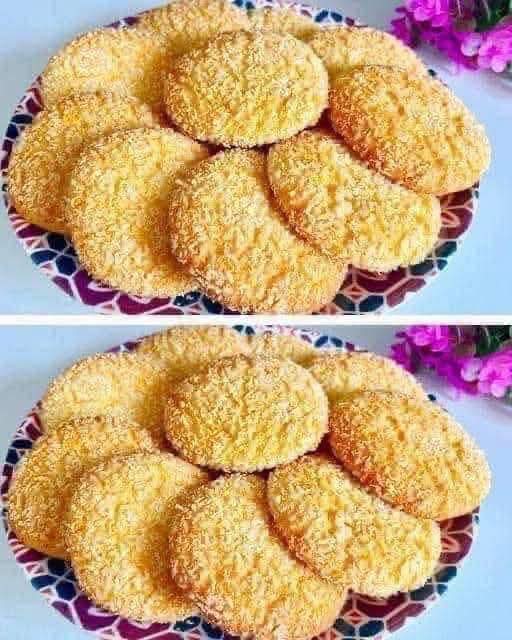
The Ultimate Moroccan Small Harcha Recipe Crispy Semolina Cakes Baked to Perfection
Moroccan cuisine is celebrated worldwide for its rich tapestry of flavors, aromatic spices, and unique combinations of textures. Among the vast array of traditional baked goods, breads, and pastries that adorn the Moroccan teatime table, Harcha holds a truly special place. Harcha is a classic Moroccan semolina pan-cake or biscuit known for its distinctively crumbly interior and a delightfully crispy outer crust. Traditionally cooked on a heavy cast-iron griddle on the stovetop, this beloved treat has evolved to include many wonderful variations, including individual, bite-sized oven-baked versions that develop beautiful rustic cracks and an extra-crunchy coating. Made primarily from fine durum semolina flour, sugar, butter, and milk, Harcha offers a comforting, subtly sweet flavor profile with a unique sandy texture that melts in your mouth. Whether you are looking to replicate a nostalgic taste from a Moroccan street food stall or wishing to introduce an authentic, easy-to-make pastry to your weekend brunch rotation, this detailed guide provides everything you need to know to achieve bakery-quality results at home.
The Cultural Significance of Harcha in Moroccan Hospitality
To truly appreciate Harcha, one must understand its essential role in the daily culinary rituals and hospitality customs of Morocco. In Moroccan culture, food is a medium for connection, storytelling, and welcoming guests into the home with open arms.
A Staple of the Traditional Moroccan Teatime
In Morocco, the late afternoon teatime, known locally as “Kouter” or “Acha,” is a daily ritual where family and friends gather to unwind, converse, and enjoy a warm beverage accompanied by various sweet and savory items. Harcha is a perennial favorite during these gatherings, sitting proudly alongside classic Moroccan mint tea, fresh Msemmen (layered flatbreads), Baghrir (thousand-hole pancakes), and assorted almond pastries. Its robust, dense structure makes it incredibly satisfying, providing a comforting energy boost to carry individuals through the afternoon. The neutral, buttery flavor of semolina allows Harcha to pair flawlessly with both sweet toppings like pure honey or apricot jam and savory accompaniments like soft laughing cow cheese or dynamic olive oil.
The Evolution from Stovetop Griddle to Modern Oven Baking
Historically, traditional Harcha is prepared as a large, flat disc cooked directly on a heavy, ungreased clay or cast-iron skillet called a “Makla.” The baker skillfully rotates the large dough disc over an open flame to ensure even browning before slicing it into wedges. While this stovetop method remains deeply popular across Morocco, the individual oven-baked variation, often referred to as “Harcha dyal el Forn,” has gained immense popularity in modern kitchens and artisanal bakeries alike. Baking small, individual Harcha portions in the oven creates a completely different textural experience. The intense, circulating heat of the oven causes the semolina dough to expand beautifully, creating a rustic, cracked surface and a uniformly golden-brown exterior coated in coarse semolina. This method is exceptionally convenient for home cooks, as it eliminates the need to stand over a hot stove flipping individual cakes, allowing you to bake an entire batch simultaneously.
Understanding the Food Science of Semolina Baking
Unlike standard western biscuits or cakes that rely on soft wheat flour to develop a light, airy, and fluffy crumb, Harcha owes its signature identity to the properties of durum wheat semolina. Understanding how semolina behaves when mixed with fats and liquids is the ultimate key to achieving the perfect balance of crumbliness and structure.
Choosing Between Fine and Coarse Semolina
When shopping for ingredients to make authentic Moroccan Harcha, you will encounter different grades of semolina flour, typically classified as fine, medium, or coarse. Fine semolina, often called “Smida Rqiqa” in Morocco, forms the primary structural foundation of the dough base. Fine semolina has enough starch accessibility to absorb liquids and fats efficiently, binding the ingredients together into a workable dough while retaining its characteristic grainy texture. Coarse semolina, on the other hand, is utilized strategically as an exterior coating just before baking. Rolling the portioned dough balls in coarse semolina creates a protective, texturized barrier that roasts beautifully in the oven, yielding that iconic, extra-crunchy outer shell that contrasts dramatically with the soft interior. You should strictly avoid substituting semolina with regular all-purpose flour or cornmeal, as wheat flour develops too much elastic gluten, turning the cake tough and bread-like, while cornmeal lacks the specific protein structure of durum wheat.
The Sablage Technique: Coating the Grains in Fat
The defining structural characteristic of a perfect Harcha is its short, crumbly texture, which should gently fall apart as you bite into it rather than stretching like bread. To achieve this short crumb, Moroccan bakers utilize a classical mixing technique known in French pastry methodology as “Sablage,” or sanding. Before any liquid components like milk or water are introduced to the bowl, the dry fine semolina is thoroughly combined with melted butter or vegetable oil. Using your fingertips, you gently rub the fat into the semolina grains until the mixture resembles wet sand. This crucial step ensures that every single grain of semolina is thoroughly coated in a microscopic layer of fat. The fat barrier effectively prevents the proteins in the semolina from hydrating too quickly when the liquids are added later, which severely restricts the development of a stretchy gluten network. Skipping this step or over-mixing the dough after adding the liquids will result in a heavy, dense, and rubbery cake instead of a light, crumbly biscuit.
Comprehensive Ingredients Breakdown and Selection
To ensure your small homemade Harcha cookies turn out identical to those found in the finest pastry shops of Marrakesh or Fez, selecting high-quality ingredients and respecting their ratios is paramount. Because this traditional recipe relies on simple, accessible pantry staples, the quality of each component directly impacts the depth of flavor.
The Fat Matrix: Butter vs. Vegetable Oil
The type of fat you select to coat your semolina grains influences both the flavor and the final texture of your Harcha. Traditional recipes often employ a combination of high-quality unsalted butter and neutral vegetable oil. Butter provides a rich, nostalgic, and deeply savory aroma that elevates the natural sweetness of the durum wheat. Vegetable oil, being a liquid fat at room temperature, contributes exceptional moisture retention, ensuring that the baked cakes remain soft and tender inside for days without turning hard or dry. Utilizing a fifty-fifty blend of melted butter and light vegetable oil offers the absolute best of both worlds, yielding a pastry that smells incredible while maintaining an optimal shelf life.
Hydration Agents: Milk, Water, or Buttermilk
To hydrate the fat-coated semolina grains and activate the leavening agents, a liquid binder must be introduced. Whole milk is the preferred choice for individual oven-baked Harcha because its natural sugars and proteins assist in the caramelization of the crust, yielding a gorgeous golden-brown hue. The fat content in whole milk also softens the internal crumb structure. Some traditional variations utilize warm water for a lighter, more minimalist profile, while others employ fermented dairy options like buttermilk or thin yogurt to introduce a subtle, pleasant tanginess that cuts through the richness of the fats. Whichever liquid you choose, it must be added gently without heavy kneading to preserve the delicate structure of the dough.
Leavening and Sweetening Enhancers
To achieve a beautiful rise and those characteristic rustic surface cracks, a combination of baking powder and a tiny pinch of active dry yeast is often incorporated into modern oven-baked Harcha variations. The baking powder provides an immediate chemical reaction when exposed to heat, forcing the cakes to expand rapidly in the oven, which splits the outer semolina shell into beautiful patterns. A small tablespoon of granulated sugar is added to enhance the natural nuttiness of the semolina without making the pastry overly sweet, as Harcha is traditionally designed to be a semi-sweet vehicle for various toppings. A generous pinch of fine sea salt is absolutely critical to balance the flavors and prevent the dough from tasting flat.
Step-by-Step Instructions for Perfect Small Oven Harcha
Creating these beautiful, individual semolina cakes is a deeply satisfying, rhythmic process that requires minimal equipment. You do not need any electric mixers, food processors, or rolling pins; a simple mixing bowl, your hands, and a standard baking sheet are all that is required.
Step 1: Executing the Sanding Phase
Begin by selecting a large, shallow mixing bowl, or a traditional Moroccan unglazed clay dish known as a “Gsaa.” Measure out your fine durum semolina, granulated sugar, baking powder, a tiny pinch of dry yeast, and fine sea salt, adding them all directly to the bowl. Use a dry whisk to thoroughly stir these dry components together, ensuring the leavening agents are perfectly distributed. Pour your melted unsalted butter and vegetable oil directly over the dry semolina mixture. Using the tips of your fingers, gently rub and toss the semolina grains with the fats. Work patiently for two to three minutes, ensuring there are no dry pockets of flour remaining at the bottom of the bowl. The mixture should resemble uniform, golden, damp sand that clumps together briefly when squeezed firmly in your palm.
Step 2: Hydrating the Dough Gently
Create a small well in the absolute center of your sanded semolina mixture. Pour your room-temperature whole milk into the well. Using an open hand or a flexible silicone spatula, gently stir the ingredients together using a circular motion. It is absolutely vital to resist the temptation to knead this mixture like a traditional bread dough. Simply fold the liquid into the semolina until all the moisture is absorbed and a very wet, loose, and almost soupy batter forms. The mixture may look alarmingly wet at this stage, but this is entirely intentional. Cover the bowl with a clean kitchen towel and let it rest undisturbed on your kitchen counter for ten to fifteen minutes. During this crucial resting window, the thirsty semolina grains will slowly absorb the milk, transforming the loose batter into a perfectly pliable, soft, and rollable dough.
Step 3: Portioning and Coating in Coarse Semolina
While your dough completes its resting period, preheat your conventional oven to four hundred degrees Fahrenheit or two hundred degrees Celsius, and line a large baking sheet with high-quality parchment paper. Place a generous half-cup of coarse semolina into a wide, shallow bowl next to your baking station. Check your dough; it should now be soft, damp, and easily hold its shape when formed into a ball. Scoop up a small portion of the dough, roughly the size of a golf ball or a small apricot. Gently roll the portion between the palms of your hands to form a smooth, uniform ball. Drop the ball directly into the bowl of coarse semolina, rolling it around gently until the entire exterior surface is completely and heavily coated in the rough grains.
Step 4: Shaping and Arranging on the Baking Sheet
Lift the coated semolina ball out of the bowl and place it onto your parchment-lined baking sheet. Using the flat palm of your hand or the tips of your fingers, gently press down on the top of the ball to flatten it slightly into a thick disc, roughly one-half to three-quarters of an inch in thickness. Do not flatten them too thin, as individual oven Harcha should retain a substantial, soft interior core. Repeat this process with the remaining dough, arranging the discs on the baking sheet while leaving about two inches of space between each cake to allow for expansion. The rough, coarse semolina coating coupled with the flattening motion will already begin to create beautiful micro-textures on the surface of the dough.
Step 5: Mastering the Oven Bake for Iconic Cracks
Slide the loaded baking sheet into the upper third of your preheated oven. For the absolute best results and to maximize the formation of those beautiful, rustic surface cracks, many experienced Moroccan bakers prefer to turn on the oven’s broiler element for the first three to five minutes of baking. The intense, direct top heat from the broiler quickly sets and dries the exterior semolina crust while the interior dough continues to expand rapidly, forcing the outer shell to split open into gorgeous patterns. Once the beautiful cracks have fully formed across the tops of the cakes, turn off the broiler and return the oven to its standard baking setting at four hundred degrees Fahrenheit. Allow the Harcha to continue baking for an additional fifteen to twenty minutes until the bottoms and edges are beautifully golden-brown and the crust feels firm and wonderfully crispy to a gentle touch.
Professional Technical Tips for Achieving Exceptional Textures
Even with a straightforward recipe, mastering small technical variables can elevate your homemade Moroccan Harcha from a simple biscuit to an extraordinary bakery masterpiece.
Managing Dough Dryness and Hydration Adjustments
Because different brands of semolina flour exhibit varying rates of liquid absorption based on their milling process and storage conditions, you may occasionally need to adjust the moisture balance of your dough after the resting period. If, after fifteen minutes of resting, your dough feels overly dry, crumbly, or cracks significantly when you attempt to roll it into a ball, it indicates that your semolina absorbed the liquid too rapidly. To correct this instantly, simply work in an extra tablespoon or two of milk using your fingertips until the dough becomes soft, pliable, and smooth. Conversely, if the dough still feels too sticky or wet to handle, allow it to rest for an additional five minutes, or dust your hands lightly with fine semolina before shaping.
The Secret to Enhancing the Aromatic Profile
While a classic Harcha relies primarily on the natural, nutty flavor of durum wheat and pure butter, you can infuse your cakes with traditional Moroccan aromas to create an even more authentic sensory experience. Try adding a tablespoon of orange blossom water (“Ma Zhar”) to your milk before hydrating the dough, or mix a teaspoon of toasted anise seeds or wild sesame seeds directly into the dry semolina during the initial phase. These traditional aromatic additions release an incredible fragrance as the cakes bake in the hot oven, filling your kitchen with the genuine scent of a traditional Moroccan home.
Comprehensive Storage and Reheating Protocols
Preserving the exceptional contrast between the extra-crispy exterior crust and the crumbly, soft interior of your individual Harcha requires proper handling once they emerge from the oven. Because semolina pastries can dry out quickly if exposed to open air, strict temperature and environment control are essential.
Cooling and Room Temperature Storage
When your small Harcha cakes finish baking, allow them to rest undisturbed on the hot baking sheet for five minutes, as they are quite delicate when warm. Use a spatula to carefully transfer them to a wire cooling rack to cool completely to room temperature. Storing them while they are still warm will trap steam inside your container, turning the crispy outer crust unpleasantly soft and soggy. Once fully cooled, place the individual cakes inside an airtight glass or plastic container. Stored at room temperature away from direct sunlight, they will remain perfectly fresh, tender, and delicious for up to three to four days.
The Art of Reheating Harcha Properly
Harcha is at its absolute pinnacle of deliciousness when served warm, as the internal butter melts slightly, softening the crumb. To reheat your stored Harcha cakes and fully restore their original crispy outer shell, avoid utilizing the microwave, which turns semolina pastries rubbery and tough. Instead, place the cakes onto a baking sheet in a toaster oven or conventional oven preheated to three hundred and fifty degrees Fahrenheit for five to seven minutes until heated through. Alternatively, you can slice the individual cakes in half horizontally and place them directly into a wide slot toaster or onto a dry skillet over medium-low heat, creating a beautifully toasted, warm canvas ready for your favorite spreads.
Traditional Accompaniments and Serving Customizations
The true joy of eating Moroccan Harcha lies in its incredible versatility. Because its flavor profile sits perfectly on the border between sweet and savory, it serves as an exceptional vehicle for an array of classic toppings.
The Classic Honey-Butter Glaze
The most iconic way to serve fresh, warm Harcha across Morocco is with a traditional warm honey-butter glaze. In a small saucepan, melt equal parts of unsalted butter and pure, high-quality honey over low heat until they form a smooth, glossy, and golden syrup. Pour this warm mixture generously over the split or whole Harcha cakes, allowing the porous semolina crumb to drink in the sweet, buttery moisture. The richness of the butter combined with the floral notes of the honey highlights the natural nuttiness of the durum wheat beautifully.
Savory Pairings for a Balanced Breakfast
If you prefer a savory start to your morning, individual Harcha cakes pair magnificently with soft, spreadable cheeses, such as traditional Moroccan Jben (a fresh, tart goat or cow’s milk cheese) or commercial cream cheese wedges. Spreading a thick layer of creamy cheese over a warm, crispy Harcha slice creates a spectacular contrast of textures and flavors. Drizzling the cheese with a few drops of robust, extra-virgin olive oil and a light dusting of wild dried thyme or cumin elevates the pastry into a deeply satisfying, rustic breakfast centerpiece.
Frequently Asked Questions About Moroccan Harcha
Can I make this Harcha recipe entirely gluten-free?
Because Harcha relies fundamentally on durum wheat semolina, which is inherently high in gluten proteins, creating a traditional version requires wheat. However, you can create a similar texturized alternative by utilizing a high-quality gluten-free flour blend combined with coarse cornmeal or certified gluten-free cream of rice to mimic the unique sandy mouthfeel of semolina, though the structural elasticity and final rise will vary slightly from the authentic version.
Why did my Harcha cakes turn out dense and heavy inside?
If your oven-baked Harcha turns out unpleasantly hard, dense, or heavy, it is highly likely that the dough was over-worked or kneaded after the milk was introduced. Kneading develops the gluten matrix within the semolina, locking the grains into a tight structure that prevents a light rise. Ensure that you only use your fingertips to gently combine the ingredients until just mixed, and respect the full resting window to allow the grains to hydrate naturally without mechanical force.
Can I freeze the baked Harcha cakes for long-term prep?
Yes, these small semolina cakes freeze exceptionally well. Allow the baked Harcha to cool completely to room temperature, wrap each individual cake tightly in plastic wrap to protect against freezer burn, and store them together inside a heavy-duty freezer bag for up to two months. To serve, simply thaw them on your kitchen counter for an hour and warm them thoroughly in your oven or toaster to restore their signature crispiness.
Conclusion
Mastering the traditional Moroccan small Harcha is a deeply rewarding culinary achievement that brings the warm comfort and rich hospitality of Moroccan baking traditions directly into your home kitchen. By respecting the food science of the sanding technique, choosing fine durum semolina for the core dough, and coating each piece in coarse semolina for a spectacular crunch, you can consistently create a pastry that stands out in both presentation and texture. These individual oven-baked cakes deliver a perfect balance of rustic beauty, crispy surfaces, and meltingly crumbly interiors that will instantly upgrade your weekend breakfast or afternoon teatime gathering. Gather your simple pantry ingredients, mix your dough with a gentle hand, and enjoy the beautiful process of sharing a authentic taste of Morocco with your family and friends.