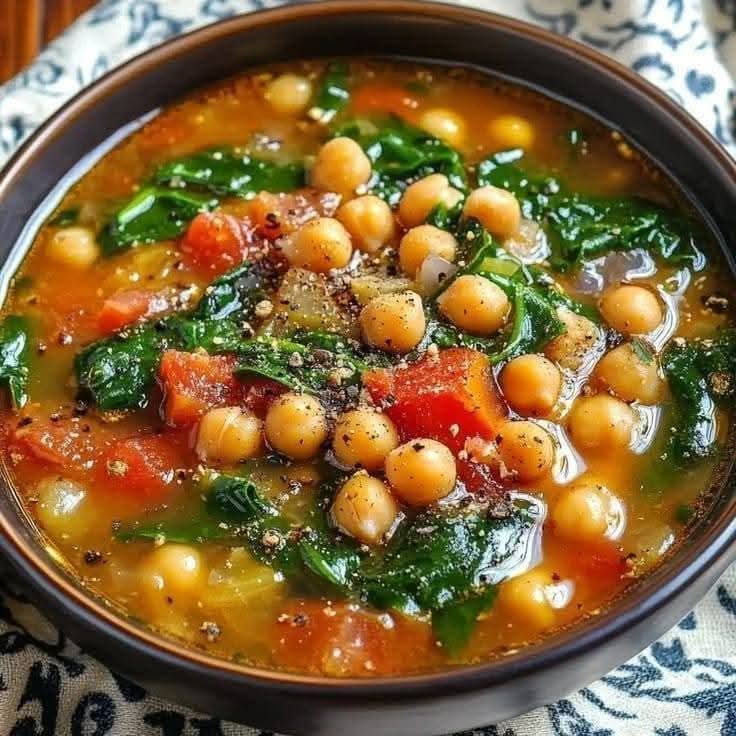
Tuscan Chickpea and Spinach Stew Recipe A Comforting Rustic Italian Classic
The Mediterranean approach to cooking shines brightest in dishes that transform humble, shelf-stable ingredients into deeply satisfying, nutrient-dense meals. This Tuscan Chickpea and Spinach Stew—known traditionally in Italian countryside kitchens as a variation of Zuppa di Ceci—is a perfect example. It bridges the gap between a light, clearing broth and a rich, hearty main course.
While commercial canned soups often rely on excess sodium, artificial flavor enhancers, or heavy starches for thickness, a true authentic Italian stew gets its body from a simple culinary trick: partially mashing a portion of the legumes directly into the broth. When combined with the earthy depth of plump chickpeas, the vibrant freshness of tender spinach, and a rich soffritto base, this rustic dish becomes an exceptional, comforting meal. This comprehensive guide details the nutritional chemistry of the ingredients, provides an exact component breakdown, outlines step-by-step cooking instructions, and offers professional pairing and storage tips.
The Culinary Science of a Perfect Stew Base
Creating a soup or stew with a complex, multi-layered flavor profile requires building a strong foundation using traditional aromatic and structural techniques.
The Foundation: The Art of the Soffritto
The aromatic base of this Tuscan stew relies on a classic Italian soffritto—a finely diced mixture of onions, carrots, and celery gently cooked in extra virgin olive oil. This process is more than just softening vegetables; it is a fundamental chemical transformation.
Slowly cooking these aromatics over low heat allows their natural sugars to caramelize gently while drawing out their moisture. The sulfur compounds in the onions mellow into a deep sweetness, the carrots contribute a subtle sugary note, and the celery provides an earthy, umami-rich undertone. Introducing minced garlic right at the end of this sweating process ensures that the heat releases its volatile aromatic oils without scorching the garlic, which can introduce a bitter taste to the entire pot.
Natural Emulsification and Body
A common dilemma when making vegetable-based stews is achieving a rich, comforting mouthfeel without resorting to heavy creams, flour-based roux, or cornstarch slurries. This recipe utilizes the natural composition of the chickpeas (Cicer arietinum) to solve that problem.
Chickpeas are naturally packed with complex starches and dietary fibers. By taking a ladleful of the stew during the cooking process, mashing the chickpeas into a smooth paste, and stirring it back into the pot, you release these native starches into the liquid. The starch molecules bond with the olive oil and vegetable broth, creating a natural, velvety emulsion that thickens the soup beautifully while keeping it entirely gluten-free and plant-based.
Complete Ingredient Breakdown
Using high-quality, whole ingredients ensures that each spoonful of this rustic stew delivers clear, distinct flavors and optimal nutritional value.
| Ingredient | Measurement | Practical Purpose in the Stew |
|---|---|---|
| Cooked Chickpeas | 2 cans (15 oz each) or 3 cups cooked | The primary protein and fiber source; provides texture, bite, and natural thickening power. |
| Fresh Spinach | 4 cups (packed) | Adds a vibrant green color, a delicate mineral freshness, and essential iron and vitamins. |
| Diced Tomatoes | 1 can (14 oz) or 4 fresh ripe tomatoes | Delivers a bright, tangy acidity and rich lycopene to balance the earthy legumes. |
| Yellow Onion | 1 medium | Finely diced; builds the sweet, aromatic base of the traditional Italian soffritto. |
| Carrot | 1 medium | Finely diced; provides a subtle sweetness and beautiful orange contrast. |
| Celery Stalk | 1 stalk | Finely diced; contributes a crisp, savory, and naturally salty depth. |
| Garlic Cloves | 3 cloves | Minced; introduces a bold, pungent warmth essential to Mediterranean cooking. |
| Vegetable Broth | 4 cups | The liquid medium; hydrates the ingredients and ties all the independent flavors together. |
| Extra Virgin Olive Oil | 2 tablespoons | Used for sweating the aromatics and finishes the dish with a luxurious, fruity mouthfeel. |
| Italian Seasoning | 1 teaspoon | A blend of dried oregano, basil, and rosemary that infuses the broth with herbal complexity. |
| Sea Salt & Black Pepper | To taste | Crucial minerals that sharpen the individual flavors and add a gentle, warming finish. |
Step-by-Step Cooking Instructions
This recipe comes together efficiently in a single pot, making it an excellent option for busy weeknights or organized weekend meal preparation.
Step 1: Sweating the Soffritto Aromatic Base
- Heat the Oil: Place a large, heavy-bottomed Dutch oven or soup pot over medium heat and add the 2 tablespoons of high-quality extra virgin olive oil.
- Add the Aromatics: Once the oil is shimmering but not smoking, toss in the finely diced yellow onion, carrot, and celery.
- Cook Low and Slow: Sauté the mixture for 6 to 8 minutes, stirring frequently with a wooden spoon. The goal is to sweat the vegetables until the onions become translucent and the carrots are slightly tender. Lower the heat if the edges begin to brown too quickly.
- Introduce the Garlic: Add the minced garlic and 1 teaspoon of Italian seasoning to the pot. Stir continuously for about 60 seconds until a highly aromatic fragrance fills your kitchen.
Step 2: Simmering the Stew Core
- Incorporate Tomatoes and Legumes: Pour the diced tomatoes (with their juices) and the 3 cups of rinsed, drained chickpeas directly into the pot. Stir well to combine the legumes with the aromatic base.
- Pour the Broth: Add the 4 cups of vegetable broth, turning the stovetop heat up to medium-high to bring the liquid to a gentle, rolling boil.
- Reduce and Simmer: Once boiling, lower the heat to medium-low, cover the pot loosely with a lid, and let the stew simmer gently for 15 to 20 minutes. This allows the chickpeas to absorb the herbal aromatics and softens the tomatoes into a rich broth.
Step 3: Thickening and Adding the Greens
- The Mash Trick: Take a large ladle or a potato masher and press down on a portion of the chickpeas against the side of the pot (or remove 1 cup of the stew, blend it until smooth, and return it to the pan). Stir thoroughly to distribute the starch paste, instantly thickening the consistency of the broth.
- Fold in the Spinach: Turn off the heat source entirely. Drop the 4 packed cups of fresh spinach into the hot liquid. Using tongs or a large spoon, gently fold the leaves into the stew. The residual heat of the broth will wilt the tender spinach to perfection within 2 minutes, preserving its bright green color and delicate texture.
- Final Seasoning: Taste the broth mindfully. Season with sea salt and freshly cracked black pepper according to your preference.
Gourmet Serving and Presentation Ideas
Elevate this humble, rustic stew into an elegant Italian dinner experience with a few simple, thoughtful finishing touches.
- The Authentic Tuscan Finish: Ladle the hot stew into wide, shallow ceramic bowls. Right before serving, drizzle a thin stream of premium, cold-pressed extra virgin olive oil over the top and finish with a generous dusting of freshly grated Parmesan or Pecorino Romano cheese.
- The Perfect Bread Companion: Serve each bowl alongside a thick slice of rustic, artisanal sourdough or Italian crusty bread. Rub the warm, toasted bread lightly with a raw garlic clove, brush it with olive oil, and use it to scoop up the rich, chickpea-thickened broth.
- A Fresh Herb Accent: Garnish the surface of the stew with a sprinkle of finely chopped fresh flat-leaf Italian parsley or a few torn ribbons of fresh basil to add a final burst of color and a clean, aromatic top-note.
Critical Storage Guidelines and Meal Prep Success
This stew is an exceptional candidate for batch cooking, as its flavor profile actually improves after sitting, making it taste even better the following day.
Storage Safety Tip
Allow the stew to cool down completely to room temperature before transferring it to storage containers. Placing a large pot of boiling-hot soup directly into a refrigerator can raise the internal temperature of the fridge, potentially putting other perishable foods at risk.
Store the stew in airtight glass containers in the refrigerator, where it will remain perfectly fresh and safe to consume for up to 4 to 5 days.
When you are ready to reheat the stew, pour your desired portion into a small saucepan over medium-low heat. Because the natural starches will continue to expand and absorb moisture as the stew sits in the fridge, you may find that it has thickened significantly into a chili-like consistency. Simply stir in a small splash of water or extra vegetable broth during the reheating process to restore it to your perfect, desired soup consistency.Frequently Asked Questions (FAQs)
Can I use dried chickpeas instead of canned ones for this recipe?
Absolutely, and doing so provides an even better texture and a richer broth. If using dried chickpeas, you must sort and soak them in water overnight (for at least 8 to 12 hours). Drain the soaking water, place the chickpeas in a pot covered with fresh water, and simmer them for 1 to 1.5 hours until they are tender before proceeding with the stew recipe. Using the starchy cooking liquid from scratch-cooked dried chickpeas instead of plain vegetable broth adds an incredible depth of body to the final dish.
Is it possible to substitute the spinach with other leafy greens?
Yes, this recipe adapts beautifully to various seasonal greens. Traditional Tuscan cooking frequently utilizes Cavolo Nero (also known as Lacinato, dinosaur, or Tuscan kale) instead of spinach. If you choose to use kale, Swiss chard, or collard greens, keep in mind that these sturdier leaves take longer to soften than delicate spinach. Strip away the tough central woody stems, chop the leaves into ribbons, and add them to the pot during the last 10 minutes of simmering rather than waiting until the heat is turned off.
Can I freeze this chickpea stew for long-term storage?
Yes, this stew freezes exceptionally well because it does not contain dairy products or heavy, moisture-releasing vegetables like potatoes, which can become grainy and unappealing upon thawing. Pour the completely cooled stew into freezer-safe containers or heavy-duty freezer bags, leaving an inch of headspace at the top to allow for liquid expansion. It can be frozen safely for up to 3 months. Thaw it overnight in the refrigerator before reheating on the stovetop.
How can I add more protein to this stew if I don’t want to keep it vegetarian?
If you would like to introduce animal-based proteins while honoring the traditional flavors of the region, you can add diced pancetta, smoky bacon, or crumbled Italian sausage to the pot at the very beginning of the recipe. Cook the meat in the pot until crispy, remove it with a slotted spoon, and use the rendered savory fat alongside a touch of olive oil to sweat your soffritto vegetables. Stir the cooked meat back into the stew during the final simmer.
Conclusion
Mastering a rustic single-pot meal like this Tuscan Chickpea and Spinach Stew is a joyful milestone for any home cook or digital food creator. By understanding the chemical value of a slow-sweated soffritto and utilizing the natural starches of the legumes to emulsify the broth, you can effortlessly create a comforting, elegant meal without any complex ingredients or techniques. Keep your greens vibrant, serve with plenty of crusty bread, and enjoy the clean, hearty vitality of traditional Mediterranean home cooking.