Natural Teeth Whitening at Home A Simple Leaf and Baking Soda Oral Care Routine
Have you ever seen a natural teeth-whitening remedy made with fresh leaves and a white powder and wondered whether it really works? Home remedies for brighter teeth are everywhere online, especially recipes that combine plant leaves with ingredients such as baking soda or salt. While some simple ingredients can help remove surface stains, it is important to understand the difference between cleaning the outside of a tooth and treating an actual dental problem.
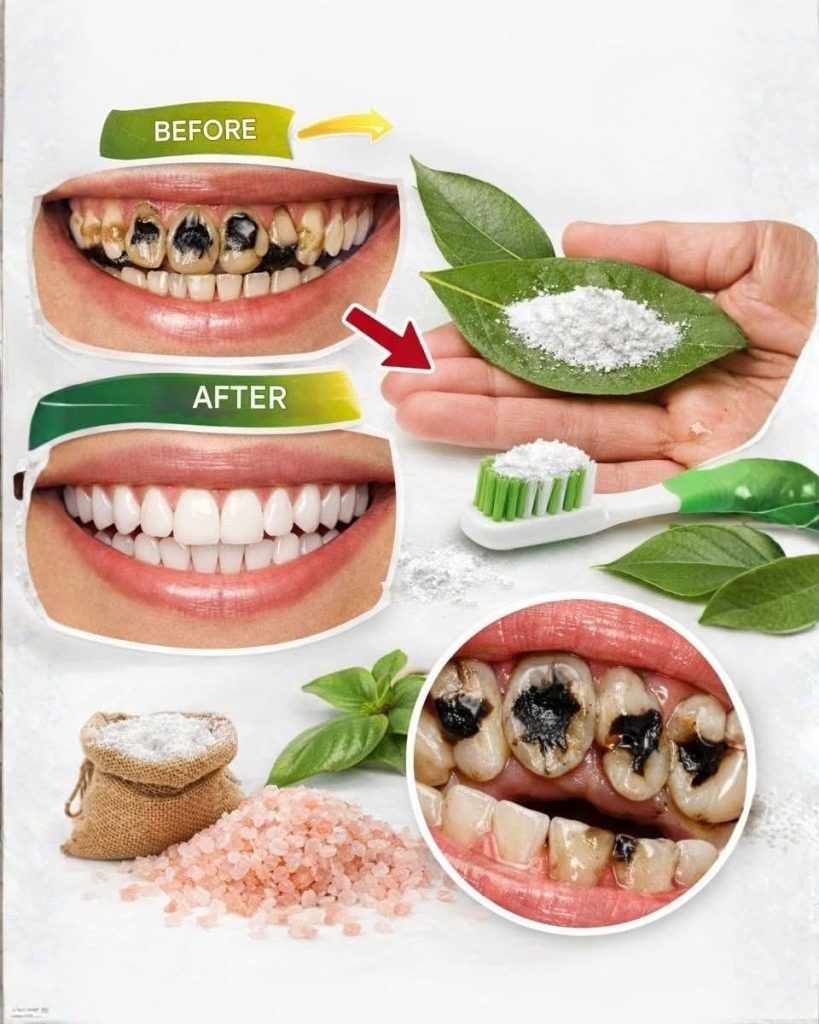
The image associated with this recipe shows a dramatic “before and after” transformation and dark areas on the teeth. However, stains, plaque, tartar, tooth decay, and cavities are not the same thing. A homemade mixture may help freshen the mouth or gently remove some surface discoloration, but it cannot repair a cavity or rebuild damaged tooth enamel. For that reason, this natural oral-care routine should be viewed as a gentle hygiene supplement rather than a replacement for professional dental care.
If you are looking for a simple homemade teeth-whitening routine, this guide explains how to prepare a mild baking-soda mixture, how plant leaves can be incorporated as a rinse when appropriate, how often to use the routine, and what mistakes to avoid. Most importantly, you will learn how to protect your enamel while working toward a cleaner, brighter smile.
What Is This Natural Teeth-Whitening Remedy?
The recipe pictured appears to use fresh green leaves together with a fine white powder and salt-like ingredients. Because the exact ingredients and quantities are not provided in the image, it would be unsafe to claim that the pictured mixture is a specific proven dental treatment.
A safer interpretation is to use a very simple oral-care routine based on ingredients commonly used for cleaning and freshening the mouth. Baking soda, also called sodium bicarbonate, is mildly abrasive and can help remove some surface stains when used carefully. It should not be treated as a cure for cavities, infections, gum disease, or damaged teeth.
Fresh plant leaves are sometimes used traditionally as mouth rinses, but the safety and effectiveness depend entirely on the plant. You should never put an unidentified leaf into your mouth simply because it appears in an online recipe. If you want to use a particular medicinal or culinary leaf, make sure the plant has been correctly identified and is known to be suitable for oral use.
Why Do Teeth Become Yellow or Stained?
Before trying any teeth-whitening recipe, it helps to understand why teeth change color. Teeth naturally vary in color, and perfectly healthy teeth are not necessarily bright white. The outer enamel can also become thinner with age, allowing the naturally darker dentin underneath to become more visible.
Common Causes of Surface Stains
Coffee, tea, red wine, cola, tobacco, and strongly colored foods can gradually leave stains on the surface of teeth. Poor brushing habits can also allow plaque to accumulate, making teeth appear dull or yellow.
In some cases, what looks like a stain is actually hardened tartar. Tartar cannot be safely removed with a homemade whitening paste. It usually requires professional cleaning.
Why Dark Spots Need Special Attention
Dark or black areas on a tooth should not automatically be assumed to be ordinary stains. They can have several causes, including severe discoloration, damaged enamel, or tooth decay. If you notice a dark spot that does not disappear with normal brushing, or if you have tooth pain, sensitivity, swelling, or a bad taste in your mouth, arrange a dental examination rather than attempting to scrub it away.
Simple Baking Soda Teeth-Cleaning Recipe
If your goal is simply to help remove superficial stains, you can prepare a very small amount of baking soda paste. This is intentionally simple because aggressive DIY whitening mixtures can damage enamel and irritate the gums.
Ingredients
- 1/2 teaspoon baking soda
- A few drops of clean water
- Your regular fluoride toothpaste
You do not need salt, lemon juice, vinegar, hydrogen peroxide, charcoal, or other harsh ingredients to make this routine. In particular, acidic ingredients such as lemon juice can be harmful to enamel when repeatedly applied to teeth.
How to Make the Mixture
Place about 1/2 teaspoon of baking soda in a clean small dish. Add only enough water to create a smooth, thin paste. Do not make a large batch for storage because a fresh mixture is preferable.
For everyday brushing, continue using your normal fluoride toothpaste. If you choose to use baking soda occasionally, keep the amount small and avoid aggressive scrubbing. The goal is gentle cleaning, not physically sanding stains away.
How to Use It
Apply a small amount to a soft-bristled toothbrush and brush gently. Use small circular movements rather than pressing hard against the teeth. Pay attention to the gumline, but do not aggressively scrub your gums.
After brushing, rinse your mouth thoroughly with water. Avoid immediately following the routine with highly acidic foods or drinks. Remember that baking soda is not a substitute for fluoride toothpaste, which plays an important role in preventing tooth decay.
Can Green Leaves Whiten Teeth?
Many traditional oral-care practices involve chewing or rinsing with certain plants. Some leaves contain aromatic compounds or naturally occurring substances that may contribute to a fresh feeling in the mouth. However, that does not mean every leaf whitens teeth or removes cavities.
If the leaves shown in an online image are not clearly identified, do not copy the recipe blindly. Plant identification matters. Some leaves that look similar can have very different properties, and some plants are unsuitable for consumption.
A Safer Herbal Rinse Approach
If you already have a culinary herb that is specifically known to be safe for food use, such as fresh mint, you can prepare a mild rinse by washing the leaves thoroughly and steeping them in hot water. Allow the liquid to cool completely before using it as a mouth rinse.
This type of rinse may leave your mouth feeling fresh, but it should not be presented as a treatment for cavities or gum disease. Spit it out after rinsing rather than swallowing large amounts.
Does Baking Soda Really Whiten Teeth?
Baking soda can help with the appearance of teeth because it is a mild abrasive that can assist in removing some surface discoloration. It can also neutralize acids and is commonly included in some commercially formulated oral-care products.
However, there is an important distinction between removing surface stains and changing the natural color of a tooth. Baking soda does not magically bleach teeth from the inside. If discoloration comes from deeper within the tooth, a homemade paste may have little effect.
Commercial whitening toothpastes are formulated with specific ingredients and tested for appropriate use. If whitening is your primary goal, choosing a reputable dental product may be a more predictable option than experimenting with strong homemade combinations.
Why You Should Not Use Lemon and Baking Soda on Your Teeth
One of the most common DIY whitening recipes combines baking soda with lemon juice. Although the mixture may appear to make teeth look brighter temporarily, it is not a good routine for protecting enamel.
Lemon juice is highly acidic. Repeated exposure to acids can soften and erode tooth enamel. Once enamel is significantly lost, the body cannot simply grow it back. Enamel erosion can eventually make teeth more sensitive and may make them appear more yellow because the underlying dentin becomes easier to see.
For this reason, avoid aggressive acidic whitening recipes, especially those promoted for daily use. A natural ingredient is not automatically a safe ingredient for your teeth.
What About Salt for Teeth Whitening?
Salt is another ingredient frequently shown in homemade dental remedies. Although salt water can be used as a traditional mouth rinse, rubbing coarse salt directly against the teeth is not a good whitening strategy.
Large salt crystals can be abrasive, and aggressive scrubbing can irritate the gums. Salt also does not repair tooth decay. If you enjoy a warm salt-water rinse for general mouth comfort, use a mild solution and spit it out rather than treating salt as a whitening treatment.
Can This Remedy Remove Cavities?
No. This is one of the most important points to understand about homemade teeth remedies.
A cavity is a form of tooth decay involving damage to the tooth structure. Once a cavity has formed, brushing with baking soda, salt, leaves, charcoal, or other homemade ingredients cannot rebuild the lost tooth structure.
A dark area may also be tartar, staining, or another dental issue, so trying to scrape it off at home can cause unnecessary damage. If you suspect a cavity, the appropriate step is to have the tooth examined by a dentist.
How to Use a Natural Teeth-Cleaning Routine Safely
Use a Soft-Bristled Toothbrush
A soft-bristled toothbrush is ideal for everyday brushing. Hard brushing does not mean cleaner teeth. Excessive pressure can contribute to gum irritation and enamel wear.
Do Not Scrub Aggressively
When people try homemade whitening recipes, one common mistake is brushing harder because they expect stains to disappear immediately. This can do more harm than good. Gentle brushing for the recommended amount of time is a better approach.
Keep Baking Soda Occasional
If you decide to use plain baking soda as an occasional stain-removing aid, use a small quantity and avoid excessive frequency. Your normal fluoride toothpaste should remain the foundation of your oral-hygiene routine.
Stop If You Experience Sensitivity
If your teeth become painful or unusually sensitive after using a homemade mixture, stop using it. Sensitivity can be a sign that the routine is irritating your teeth or gums, or it may indicate an underlying dental problem.
What Makes a Smile Look Whiter Naturally?
Sometimes you do not need a powerful whitening treatment to make your smile look brighter. Consistent oral hygiene can make a significant visual difference by reducing plaque and surface stains.
- Brush your teeth regularly with fluoride toothpaste.
- Clean between your teeth with floss or another appropriate interdental cleaner.
- Drink water regularly.
- Limit frequent exposure to sugary drinks and snacks.
- Reduce habits that cause staining, such as tobacco use.
- Have professional dental cleanings when recommended.
- Address dental problems instead of trying to cover them with whitening products.
Natural Teeth Whitening Recipe: Quick Summary
Recipe type: DIY oral-care routine
Preparation time: 1 minute
Active ingredient: A small amount of baking soda
Best for: Occasional removal of some surface stains
Important: Not a treatment for cavities, tooth infections, gum disease, or damaged enamel
Frequently Asked Questions
Can baking soda make yellow teeth white?
Baking soda may help remove some surface stains, which can make teeth appear cleaner and somewhat brighter. It does not necessarily change the natural underlying color of teeth and should not be used aggressively.
Can I brush with baking soda every day?
It is better not to rely on homemade baking-soda brushing as your everyday replacement for fluoride toothpaste. If you want to use baking soda, use it cautiously and prioritize a regular fluoride toothpaste and gentle brushing routine.
Can leaves remove black spots from teeth?
There is no reliable basis for assuming that an unidentified leaf can remove black areas from teeth. A black spot may be a stain, tartar, decay, or another dental problem. It is better to have persistent dark spots evaluated by a dental professional.
Can this recipe cure tooth decay?
No. Homemade mixtures cannot repair a developed cavity or restore missing tooth structure. Proper dental evaluation is important when tooth decay is suspected.
Is salt good for whitening teeth?
Salt is not a reliable tooth-whitening treatment. Rubbing coarse salt directly onto teeth can be unnecessarily abrasive. A mild salt-water rinse is a different practice and should not be confused with whitening or cavity treatment.
How can I whiten my teeth without damaging them?
Start with good daily oral hygiene and avoid aggressive DIY treatments. If you want noticeable whitening, discuss appropriate options with a dental professional. This is especially important if you have sensitive teeth, fillings, crowns, gum problems, or visible dark spots.
Final Thoughts
The leaf-and-powder teeth-whitening remedy shown in the image is an appealing example of the many natural oral-care recipes shared online, but dramatic before-and-after pictures should always be viewed with caution. A homemade mixture may help with surface cleanliness, but it cannot transform a decayed tooth into a healthy one or replace professional dental treatment.
For a simple approach, focus on gentle brushing, fluoride toothpaste, cleaning between the teeth, drinking water, and limiting habits that contribute to staining. If you choose to experiment with a small amount of baking soda, use it conservatively rather than scrubbing aggressively. Avoid unidentified leaves and harsh combinations such as acidic lemon juice and abrasive powders.
Most importantly, do not mistake a dark spot, hole, pain, swelling, or persistent sensitivity for an ordinary stain. Those symptoms deserve professional attention. A healthy smile is about much more than whiteness, and protecting your enamel and gums should always come before chasing a brighter shade.