Natural Ways to Support Circulation and Reduce Leg Fatigue Beyond the Quick Fixes
Experiencing heavy legs, persistent fatigue, and occasional tingling in the lower extremities can be incredibly frustrating. These symptoms often stem from a sluggish circulatory system or poor venous return, which is particularly common for individuals who spend long hours standing or sitting. When searching for solutions, it is easy to come across dramatic internet advertisements claiming that a single juice or secret remedy can completely cure complex vascular issues overnight. However, improving your vascular health requires moving past sensationalized claims and focusing on realistic, evidence-based habits that genuinely support your body’s natural blood flow.
While a single blended beverage cannot magically rebuild your veins or replace medical advice, incorporating specific nutrient-dense ingredients—like nitrates from beets, protective antioxidants from berries, and hydration—can provide excellent foundational support. When paired with deliberate physical activity and targeted lifestyle modifications, these natural approaches can significantly alleviate the feeling of heavy, tired legs. This guide breaks down the true biology of circulatory health and provides sustainable, practical methods to boost blood flow and restore energy to your lower limbs safely.
Understanding the Common Causes of Leg Fatigue and Tingling
To address poor circulation or leg discomfort effectively, you must first understand how blood travels through your lower body. Your circulatory system relies on a complex network of arteries to deliver oxygen-rich blood away from the heart, and veins to pump that deoxygenated blood all the way back up against gravity.
Venous Insufficiency and Gravity
The veins in your legs contain tiny, one-way valves designed to open and close as your muscles contract, pushing blood upward toward your torso. When you remain stationary for long stretches, these valves experience increased pressure. Over time, the vein walls can lose some of their elasticity, causing the valves to weaken. This results in blood pooling slightly in the lower legs, which manifests physically as a dull ache, swelling, fluid retention, or a heavy sensation.
Nerve Compression and Microcirculation
Tingling or a “pins and needles” sensation is often a sign of temporarily compromised microcirculation or nerve compression. When blood flow to the tiny capillaries supplying your nerves is reduced, or when fluid retention puts physical pressure on peripheral nerves, it disrupts normal signaling. While this is frequently benign and related to posture, chronic symptoms always warrant a professional medical evaluation to rule out underlying nerve issues, deep vein thrombosis, or cardiovascular conditions.
Separating Viral Trends from Scientific Reality
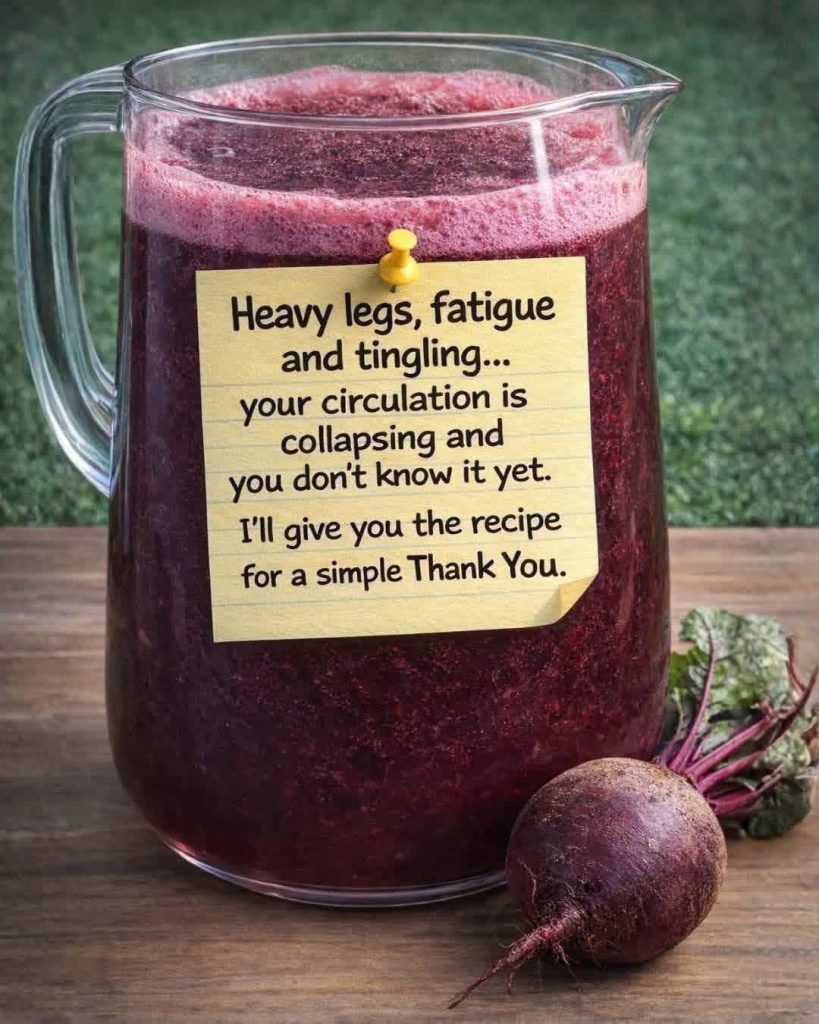
Social media platforms are filled with images of bright red beet juices accompanied by alarming warnings about collapsing circulation. While beets are an exceptional dietary addition, it is critical to separate marketing fearmongering from actual human physiology.
The True Power of Beets: Nitric Oxide Production
The reason red juices—particularly those utilizing fresh beetroots—are highly praised for circulation comes down to plant compounds called dietary nitrates. When you consume beets, your body converts these nitrates into nitric oxide (NO). Nitric oxide acts as a powerful signaling molecule that induces vasodilation, which is the relaxation and widening of the blood vessels. When your blood vessels dilate, resistance decreases and blood can flow more smoothly throughout your body, facilitating better oxygen and nutrient delivery to tired leg tissues. This is a well-documented scientific mechanism, but it acts as a gradual support system, not an instantaneous medical cure.
The Limitation of “Miracle” Cleanses
An item or beverage cannot completely repair damaged venous valves or cure systemic vascular disease in a few days. Relying solely on a juice to address serious physical symptoms while ignoring underlying lifestyle patterns can delay proper care. A healthy circulatory system requires a consistent combination of daily movement, proper hydration, and an overall balanced diet rather than short-term, extreme detox regimens.
Key Dietary Elements to Boost Blood Flow
Optimizing your daily nutrition is an excellent way to strengthen blood vessel walls, reduce fluid retention, and support overall cardiovascular efficiency from the inside out.
- Beetroot and Leafy Greens: Rich in natural nitrates, vegetables like beets, spinach, arugula, and kale help maximize nitric oxide production, encouraging your blood vessels to relax and expand naturally.
- Flavonoid-Rich Berries: Blueberries, blackberries, and raspberries are loaded with anthocyanins, which are powerful antioxidants that protect the delicate inner lining of your blood vessels from oxidative stress and help maintain vein elasticity.
- Citrus Fruits and Vitamin C: Oranges, lemons, and grapefruits supply high doses of vitamin C, an essential component for the synthesis of collagen. Collagen provides structural integrity and strength to your vein walls, helping them withstand hydrostatic pressure.
- Hydration and Electrolytes: Drinking plenty of filtered water prevents your blood from becoming overly viscous, which makes it much easier for your heart to pump it through your extremities. Incorporating potassium-rich foods like bananas or avocados balances sodium levels, reducing the fluid retention that causes swelling.
A Wholesome Red Circulation Support Smoothie Recipe
While a juice is not an overnight cure, a nutrient-packed smoothie can serve as a delicious, refreshing way to deliver circulation-supporting compounds directly to your body. Using a blender rather than a juicer retains the beneficial dietary fiber, which ensures a steady release of nutrients without spiking your blood sugar.
Ingredients:
- 1 small raw beetroot (peeled and finely chopped)
- 1 cup of frozen mixed berries (blueberries and raspberries)
- 1 small piece of fresh ginger (peeled)
- 1/2 fresh lemon (juiced)
- 1 cup of pure coconut water or filtered water
Instructions:
Place the finely chopped raw beet, mixed berries, and fresh ginger into the pitcher of a high-speed kitchen blender. Pour in the fresh lemon juice and coconut water. Blend on high speed for 1 to 2 minutes until the mixture is completely smooth and free of any gritty beet chunks. Drink this vibrant blend in the morning or before a walk to maximize the benefits of the natural nitrates and antioxidants.
Practical Lifestyle Habits to Relieve Heavy Legs
Changing what you consume is only one part of the equation; physical adjustments are essential to mechanically assist your veins in pumping blood back to your heart.
Activating the Calf Muscle Pump
Your calf muscles are frequently referred to by medical professionals as your “peripheral heart.” Every time you take a step, your calf muscles contract and squeeze the deep veins in your lower legs, forcefully driving blood upward against gravity. To combat the effects of a sedentary job, make it a rule to stand up every hour and perform twenty calf raises, pushing up onto your tiptoes and slowly lowering back down. Simple activities like daily brisk walking, cycling, or swimming are incredibly effective ways to keep this mechanical pump working efficiently.
The Power of Elevation and Compression
If your legs feel heavy and tired at the end of a long day, spend 15 to 20 minutes elevating your feet above the level of your heart. You can prop your legs up on a stack of pillows or rest them vertically against a wall. This position uses gravity to your advantage, allowing pooled blood and fluid to drain easily away from your lower limbs. For those who must stand or sit for prolonged periods, wearing graduated compression socks provides steady external pressure that prevents fluid accumulation and supports weak vein walls throughout the day.
Conclusion
Experiencing heavy, fatigued, or tingling legs is a clear signal from your body that it needs structural and circulatory support. While viral social media claims may push quick fixes and sensational recipes, real vascular health is built through consistent, everyday choices. By incorporating nitrate-rich foods like beets into your diet, staying deeply hydrated, regularly activating your calf muscles through movement, and practicing leg elevation, you can substantially improve blood flow and relieve discomfort. Listen to your body, step away from extreme promises, and focus on nurturing your circulatory system with sustainable, long-term habits for lasting vitality.