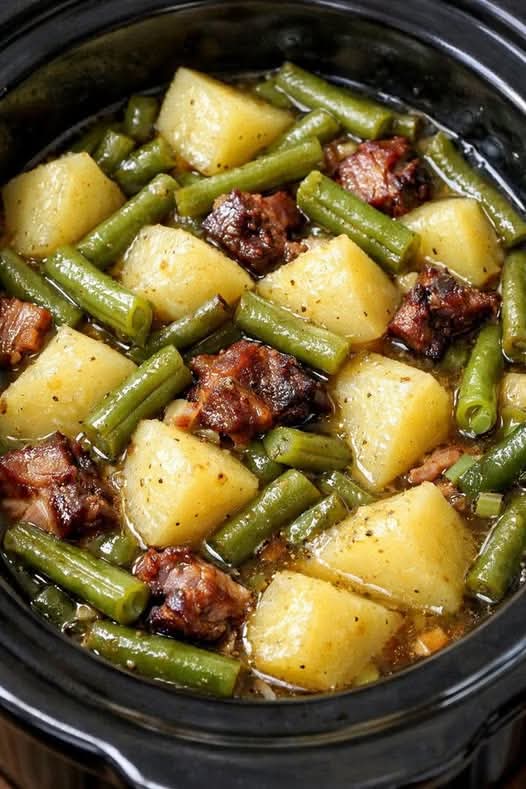
Slow Cooker Southern Green Beans and Potatoes with Pork
When it comes to comfort food that feels like a warm embrace, few traditions deliver quite like Southern soul food. A classic combination of fresh green beans, tender russet potatoes, and smoky pork simmered slowly in a rich, savory broth is a staple on dinner tables across the American South. This dish exemplifies the beauty of low-and-slow cooking, transforming a few simple, budget-friendly ingredients into a multi-dimensional side dish or a satisfying standalone meal.
The secret to this exceptional recipe lies in the slow cooker. Instead of boiling the vegetables rapidly on the stovetop, which can wash away their natural sugars and leave them mushy, cooking them gently over several hours allows the ingredients to absorb the smoky, savory flavors of the pork deeply. The potatoes become melt-in-your-mouth tender, the green beans soften to the perfect texture while soaking up the seasoned broth, and the meat yields its rich fats to create a deeply satisfying “pot likker”—the highly prized, flavor-packed liquid at the bottom of the pot. Whether you are hosting a traditional Sunday family dinner, planning a holiday menu, or looking for an easy, hands-off weeknight meal, this slow cooker classic is a guaranteed crowd-pleaser.
The History and Tradition of Southern Slow-Cooked Greens
To truly appreciate this recipe, it helps to understand the cultural roots of Southern vegetable preparation. Historically, long-cooked vegetables were designed to maximize flavor using minimal resources. Tougher cuts of cured or smoked pork were used as a flavoring agent rather than the main protein, seasoning large pots of fresh garden produce to feed big families.
In traditional Southern cooking, green beans—often called “string beans” or “pole beans”—are not served bright green and crisp-tender like their French blanched counterparts. Instead, they are intentionally simmered until they take on a muted olive hue and a velvety, tender texture. This extended cooking time breaks down the fibrous cell walls of the beans, allowing them to fully mingle with the rendered pork fat and seasoned broth. Adding potatoes to the pot creates a complete, hearty dish, with the starches from the potatoes naturally thickening the simmering liquid into a silky sauce.
Key Ingredients for Authentically Rich Flavor
Because this recipe relies on a slow-infusion process, selecting ingredients that hold up well to long cooking times is essential for achieving the perfect balance of textures and flavors.
- Fresh Green Beans: For the absolute best results, use fresh, whole green beans. Look for bright, plump pods that snap cleanly when bent. Snap off the stem ends and cut or break them into uniform two-inch pieces. While frozen green beans can work in a pinch, canned beans should be avoided as they are already overcooked and will disintegrate into mush over a long simmer.
- Sturdy Potatoes: Russet potatoes or Yukon Gold potatoes are the ideal choices for this dish. Russets contain a high starch content, which allows the edges to soften and slightly thicken the broth while the interiors remain fluffy. Yukon Golds offer a natural buttery flavor and a slightly creamier texture that holds its shape beautifully.
- Smoky Pork: The choice of meat defines the foundational flavor profile of the entire dish. Traditional options include thick-cut smoked bacon, diced salt pork, smoked ham hocks, or smoked pork neck bones. As the pork cooks, its rendered fat, salt, and woodsmoke aroma infuse every single layer of the dish.
- Savory Broth: While water can be used, a high-quality chicken broth or vegetable stock adds an extra layer of savory depth to the pot likker.
- Aromatics and Seasonings: A simple combination of diced yellow onion, minced garlic, a pinch of crushed red pepper flakes for subtle warmth, and freshly cracked black pepper elevates the broth without overshadowing the smoky pork flavor.
Why the Slow Cooker is the Ultimate Tool for This Recipe
While you can cook this dish in a heavy Dutch oven on the stovetop, a slow cooker offers distinct advantages that yield a superior final texture and flavor distribution.
Gentle Thermal Mass and Steady Heat
A slow cooker applies low, indirect heat steadily from all sides rather than just from the bottom of a pan. This gentle environment prevents the high-starch potatoes from scorching or sticking to the bottom of the vessel. The slow rise in temperature gives the collagen and connective tissues in the smoked pork ample time to melt into gelatin, giving the broth a luxurious, velvety mouthfeel that cannot be replicated by rapid boiling.
Hands-Off Convenience and Flavor Infusion
Because the slow cooker traps moisture efficiently under its heavy lid, there is zero risk of the cooking liquid evaporating and drying out the food. You can simply layer your ingredients into the ceramic insert in the morning, set the timer, and go about your day. Over the course of six to eight hours, a magical flavor exchange occurs: the pork seasons the broth, the broth marinates the green beans, and the potatoes absorb both the salt and the smoke, culminating in a cohesive, perfectly unified dish.
Step-by-Step Instructions for Slow Cooker Green Beans and Potatoes
1. Preparing the Ingredients
Begin by thoroughly washing your fresh green beans under cool water. Snap off the tough stem ends and break the beans into bite-sized pieces roughly two inches in length. Peel your potatoes (or leave the skins on if using thin-skinned Yukon Golds for a more rustic look) and chop them into large, uniform chunks, roughly one-and-a-half to two inches thick. Keeping the potato pieces large ensures they finish cooking at the exact same time the green beans reach their perfect tenderness, preventing them from dissolving completely into the liquid. Dice your smoked pork or bacon into thick, substantial pieces.
2. Layering the Pot
For optimal flavor extraction, place the diced smoked pork, chopped onions, and minced garlic at the very bottom of your slow cooker insert. This places the fat-rendering meat closest to the heating elements. Next, pile the snapped green beans directly over the aromatic base. Arrange the large potato chunks evenly on top of the green beans. Keeping the potatoes near the top allows them to steam gently in the rising aromatic vapors, preventing them from absorbing too much liquid too quickly and becoming soggy.
3. Seasoning and Simmering
In a separate measuring cup or bowl, whisk together your chicken broth, a pinch of sea salt, freshly cracked black pepper, and a dash of red pepper flakes. Pour this seasoned liquid carefully over the layered ingredients in the slow cooker. The liquid should not completely submerge the potatoes; it should come up roughly halfway through the green bean layer. Cover the slow cooker tightly with its lid. Set the machine to cook on LOW for 6 to 8 hours, or on HIGH for 3 to 4 hours. The low setting is highly recommended to achieve that signature, melt-in-your-mouth Southern texture.
Expert Tips for the Ultimate Southern Side Dish
To ensure your batch turns out flawless every single time, keep these expert culinary tips in mind during preparation:
Controlling the Salt Levels
Smoked and cured pork products like bacon, salt pork, and ham hocks naturally contain a massive amount of sodium. As they simmer, they release this salt directly into the surrounding broth. To avoid an overly salty dish, use a low-sodium chicken stock or water as your base liquid, and hold off on adding any extra salt to the pot until the final hour of cooking. Taste the broth right before serving and adjust the seasoning with an extra pinch of sea salt only if necessary.
How to Fix an Overly Thin Broth
If you prefer a thicker, richer sauce clinging to your vegetables rather than a clear broth, you can easily use the starches already inside the pot to adjust the consistency. Simply take a spoon and gently mash two or three of the cooked potato chunks directly against the inside wall of the slow cooker insert, stirring the mashed potato back into the simmering liquid. The released starches will instantly emulsify with the rendered pork fat, transforming the thin pot likker into a silky, savory glaze that coats every bean and potato slice beautifully.
Serving Suggestions and Pairing Ideas
This versatile dish can easily wear many hats in your meal rotation. It is substantial enough to serve as a comforting, one-pot winter dinner when scooped into wide bowls alongside a big square of warm buttermilk cornbread for dipping into the rich broth.
Alternatively, it serves as the ultimate side dish for a classic Southern feast. It pairs exquisitely alongside crispy fried chicken, slow-roasted pork shoulder, or a baked holiday ham. The bright, vinegary notes of a splash of hot sauce or a drizzle of apple cider vinegar at the table cut through the rich, smoky fats of the dish beautifully, waking up the palate and highlighting the natural sweetness of the fresh green beans.
Storing and Reheating Leftovers
Like most slow-cooked stews and braises, this dish tastes even better the next day as the ingredients sit in the refrigerator and continue to absorb the complex, smoky flavors of the seasoned broth.
Allow any leftovers to cool completely to room temperature before transferring them into an airtight container. Store the container in the refrigerator, where the green beans, potatoes, and pork will remain fresh and delicious for up to three to four days.
When you are ready to enjoy it again, simply transfer the desired portion into a small saucepan on the stovetop over medium-low heat. Cover and let it simmer gently until heated through, stirring occasionally to ensure the potatoes warm up evenly without breaking apart. You can also reheat individual portions in the microwave for 1 to 2 minutes, wrapping the bowl loosely to retain the moisture and keep the potatoes exceptionally soft and fluffy.
Conclusion
Mastering slow cooker Southern green beans and potatoes with pork is an incredibly rewarding experience that brings a timeless taste of rustic comfort directly to your modern kitchen. By relying on a long, slow cook time and allowing high-quality smoked pork to naturally season your fresh garden produce, you can create a deeply satisfying, multi-textured masterpiece with minimal physical effort. It is a wholesome, heartwarming dish that celebrates the rich heritage of slow-infused flavors and brings absolute comfort to any dinner table. Gather your ingredients, layer your pot, and enjoy a true culinary classic in its finest form.